


LINDA ZEB HANG
A Cooling Nest for All Kinds of Speech, Lamentations, and Ecstatic Forms
ASSORTED PUBLICATIONSCULPTURES, DYADIC FURNITURE, WAVES OF LIGHT, AND OTHER SUPPORTIVE MATERIAL
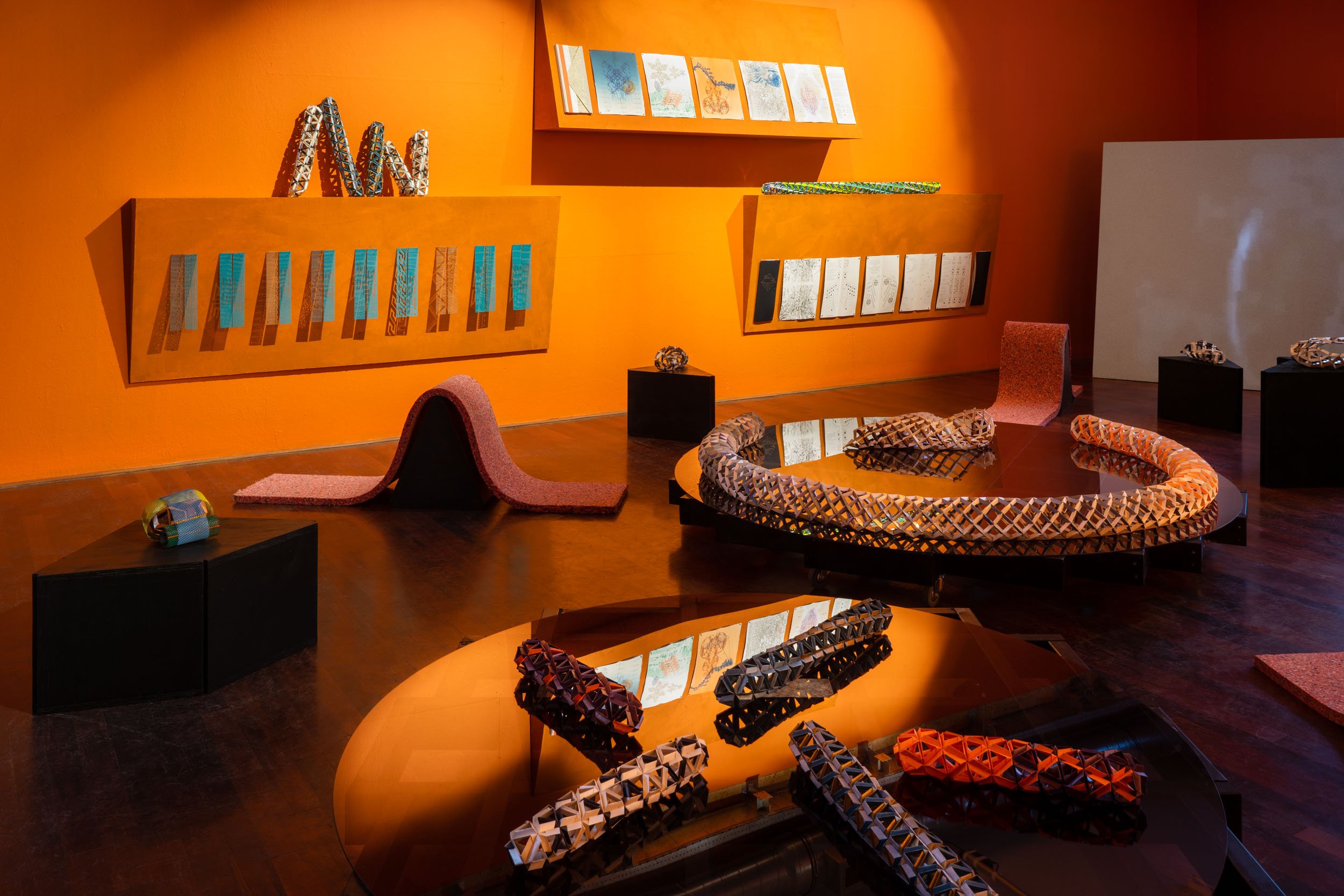
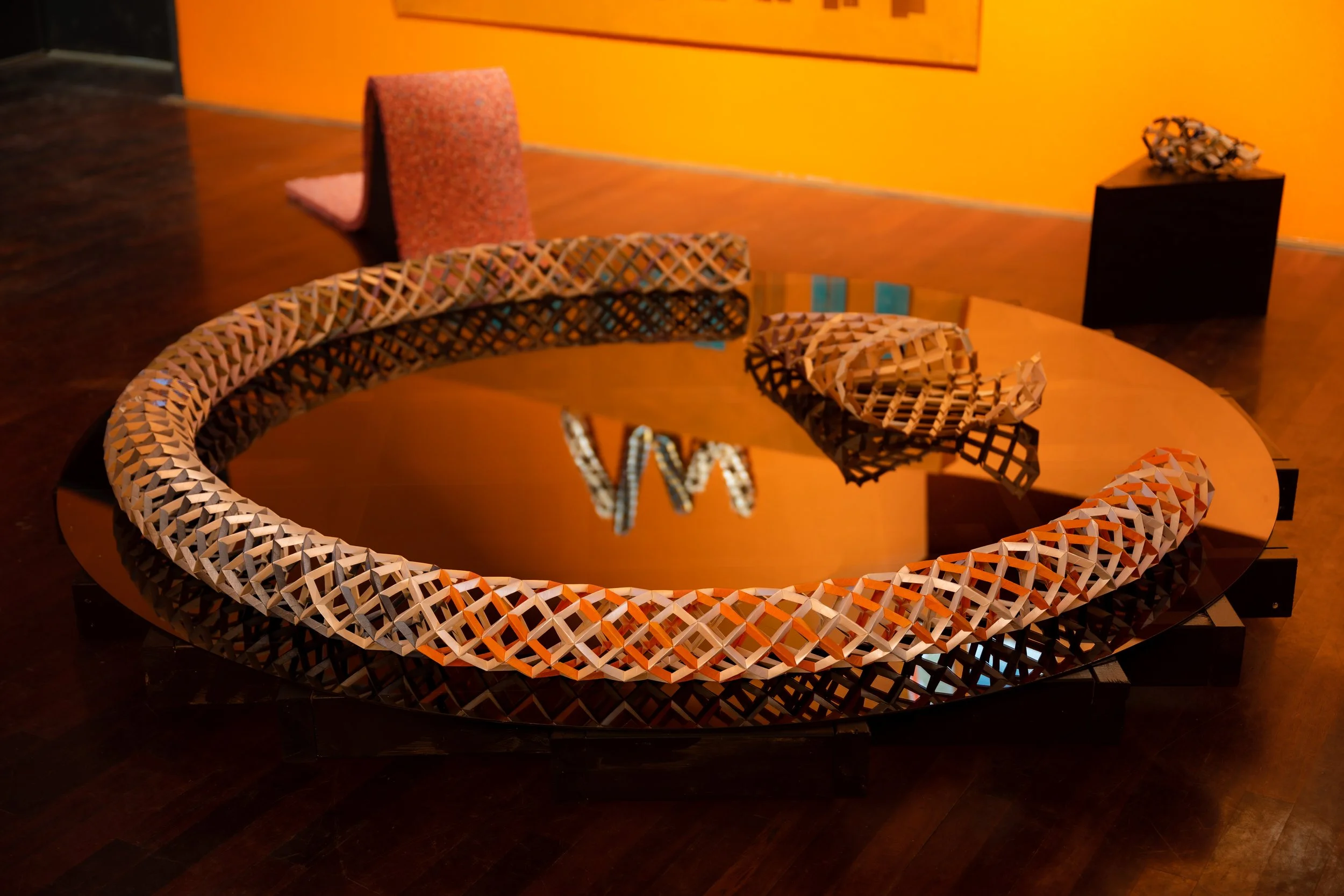
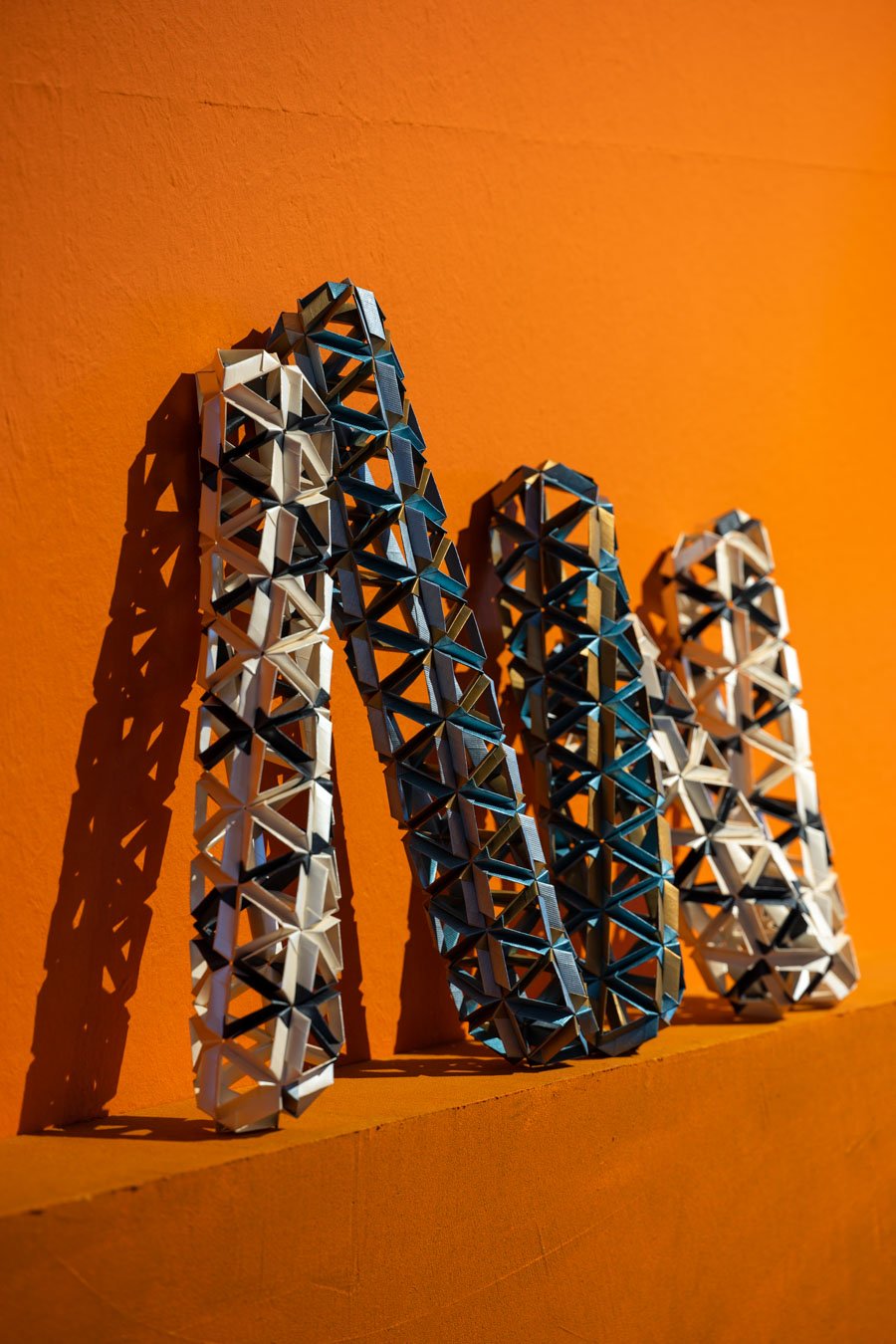
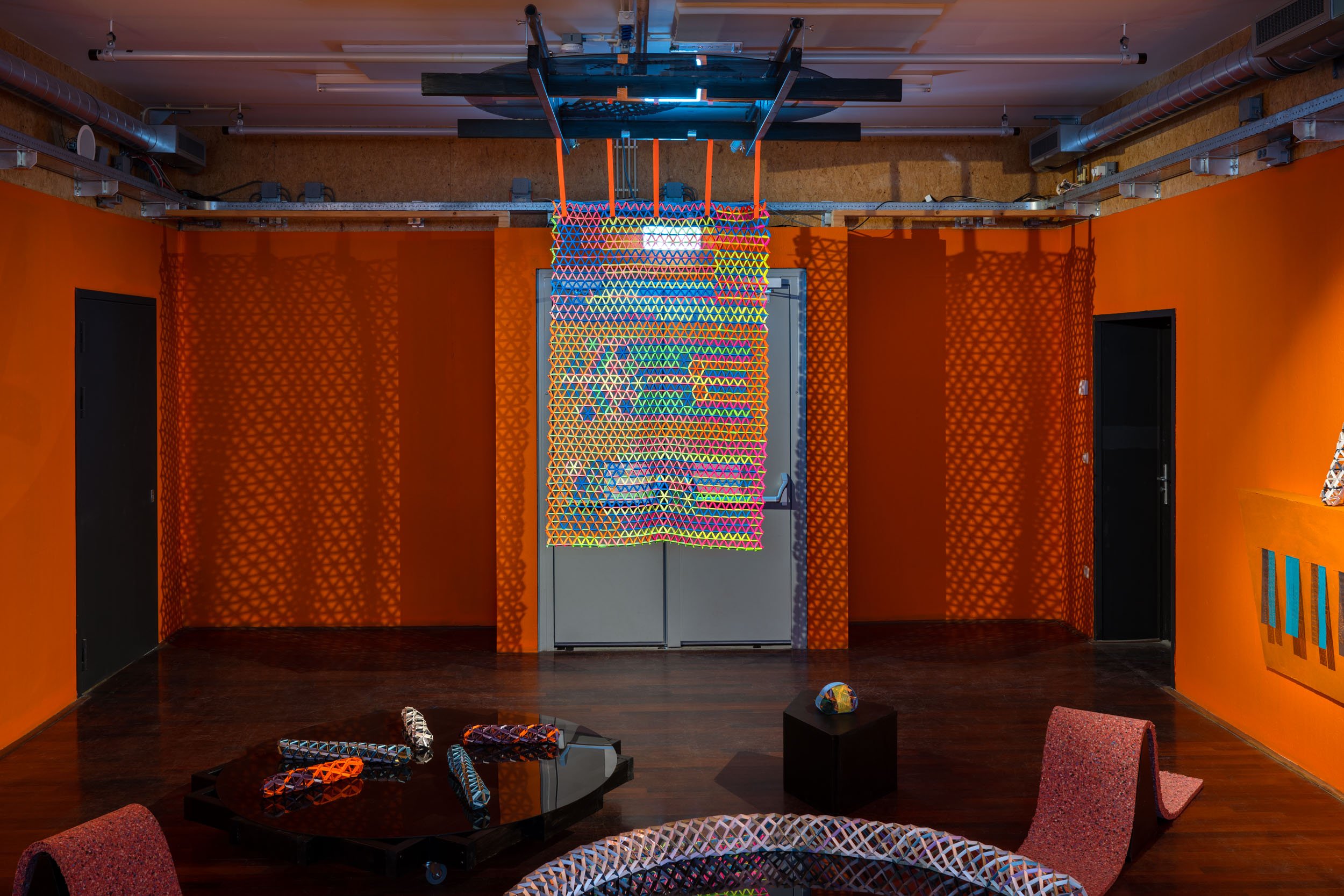
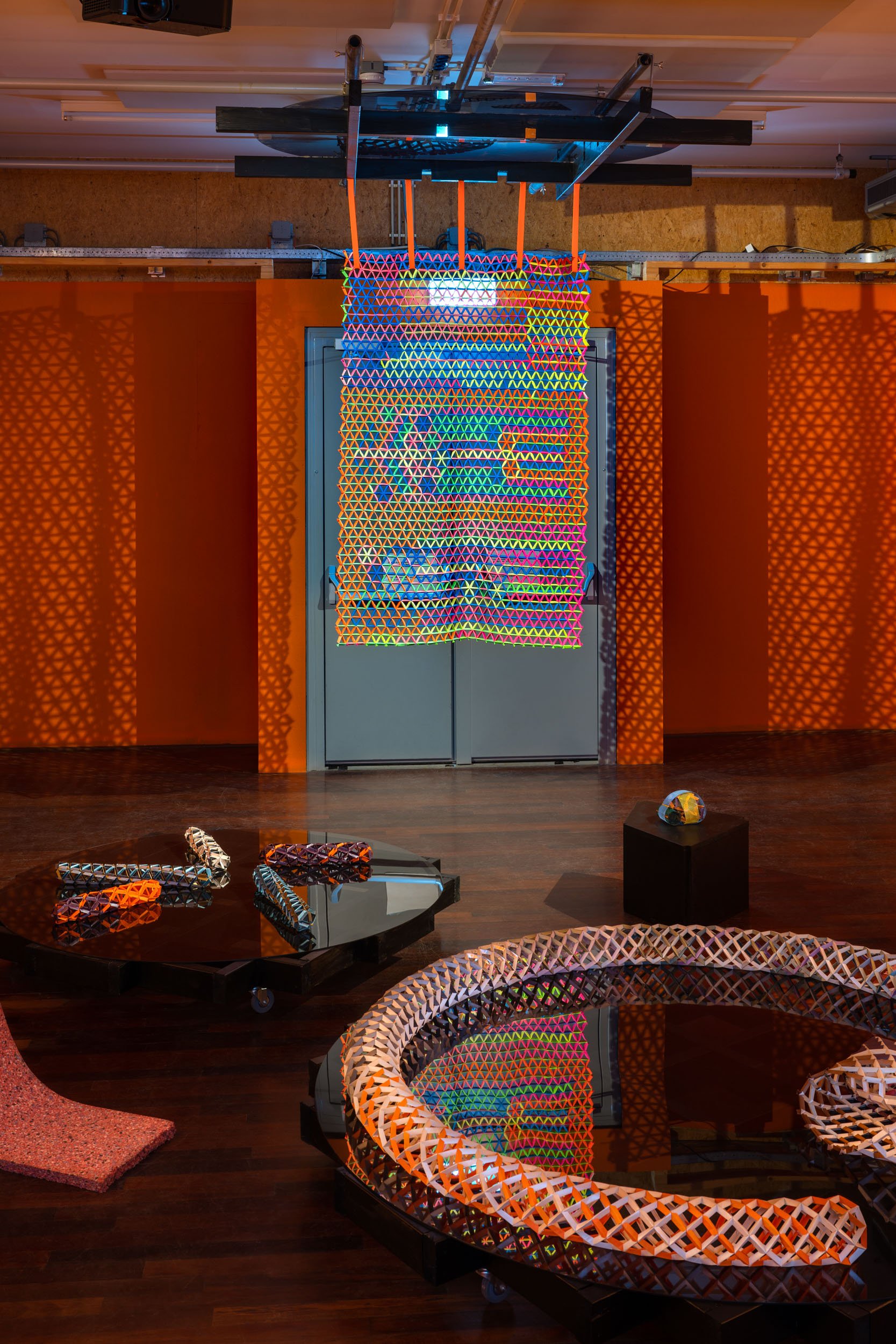
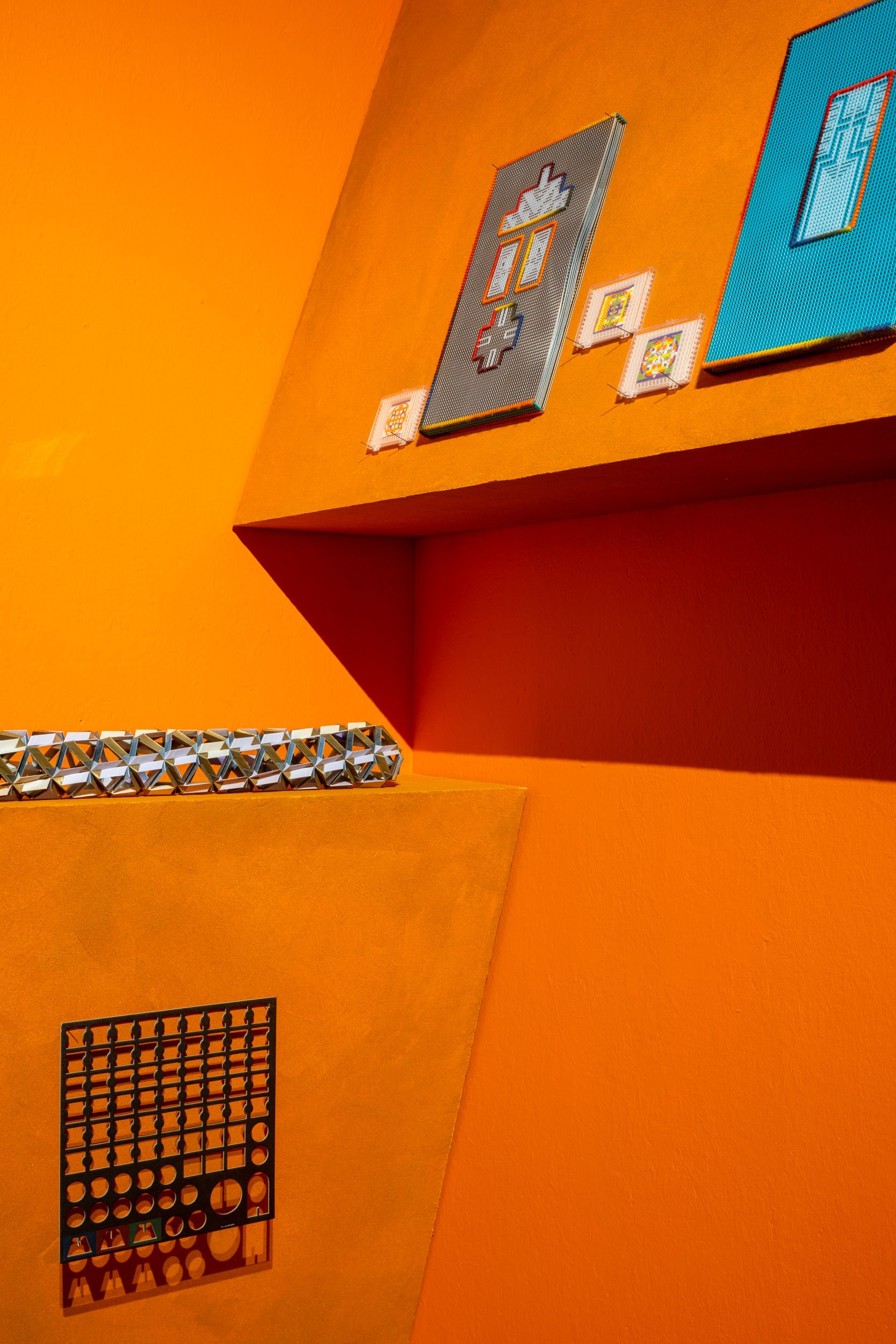
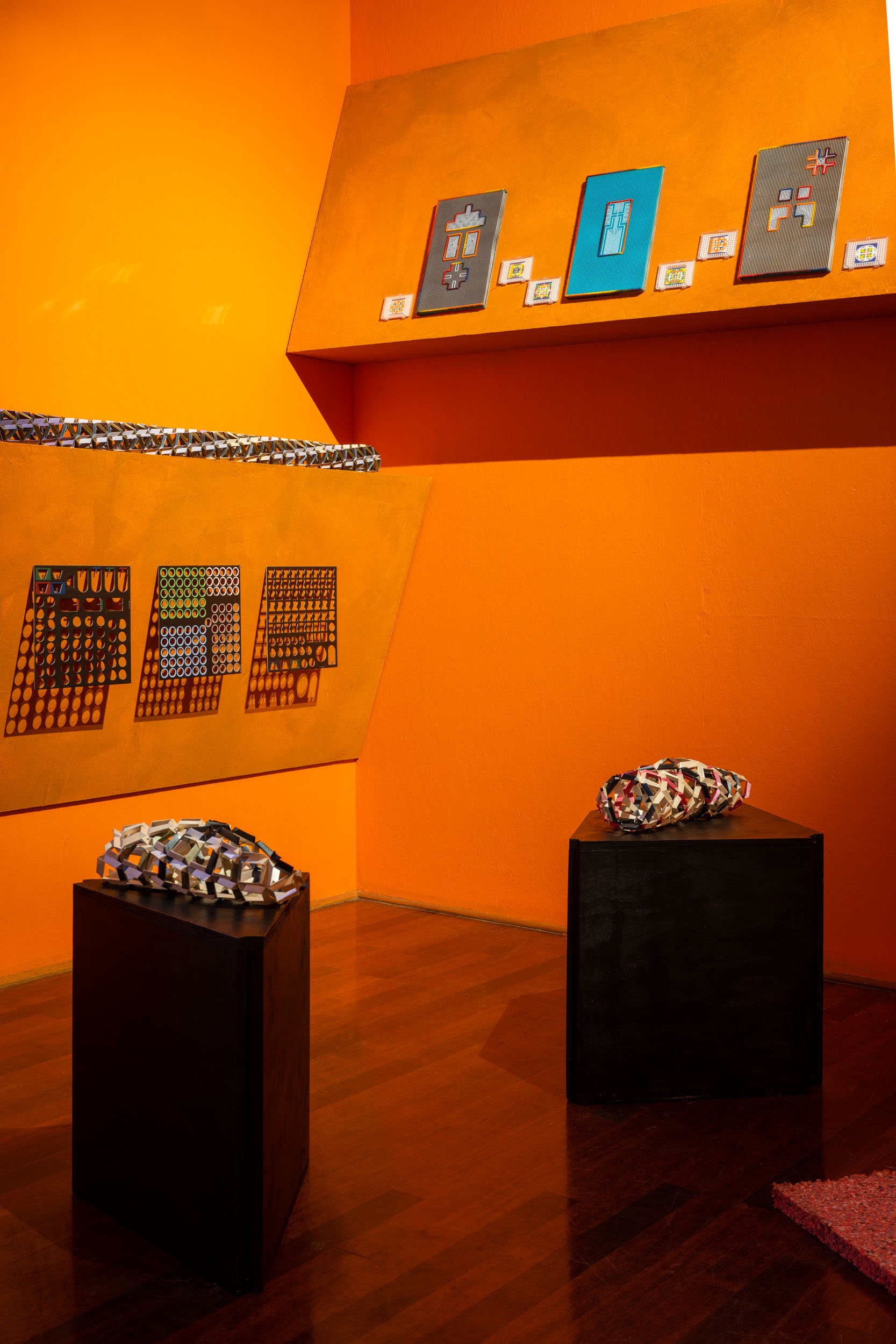
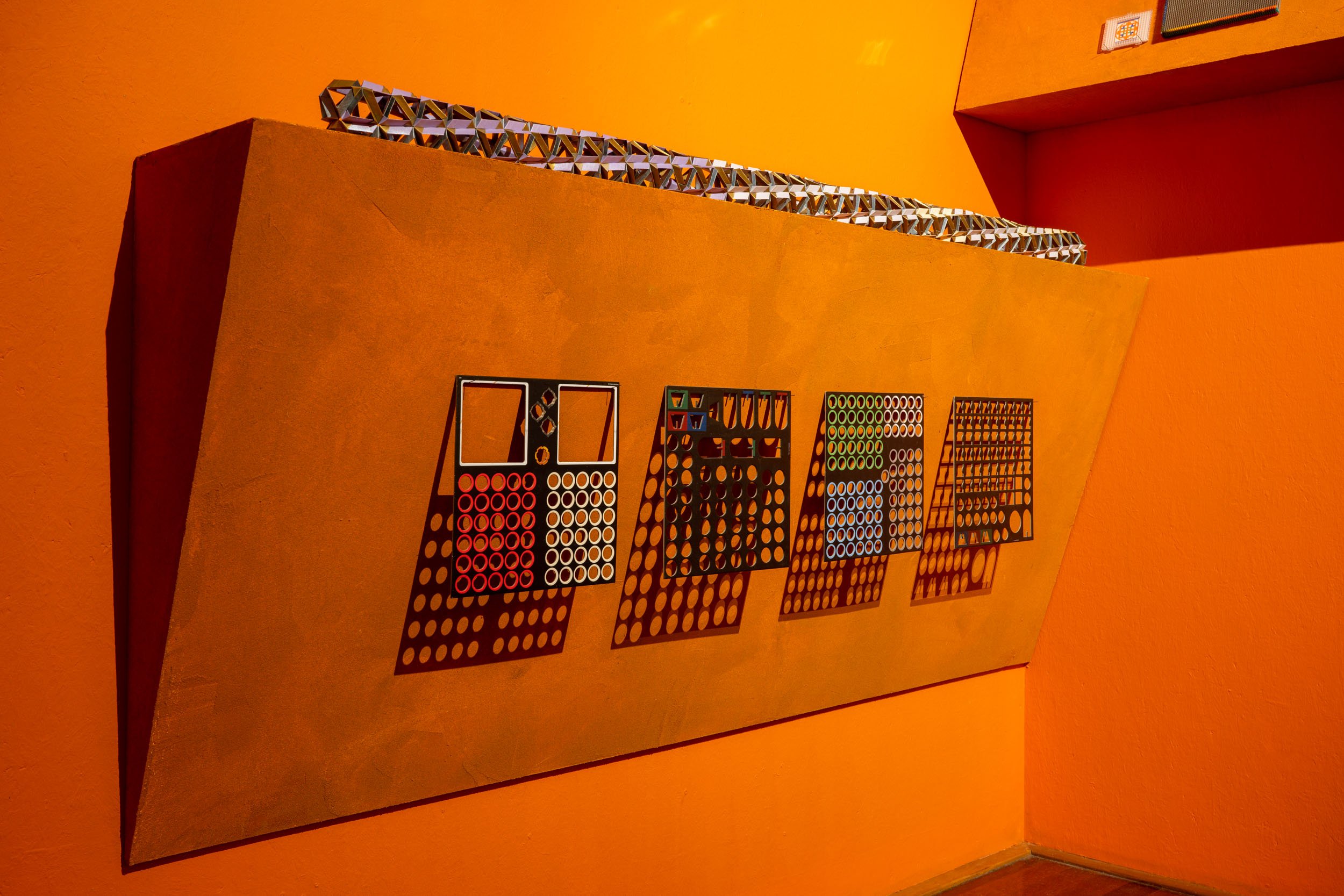
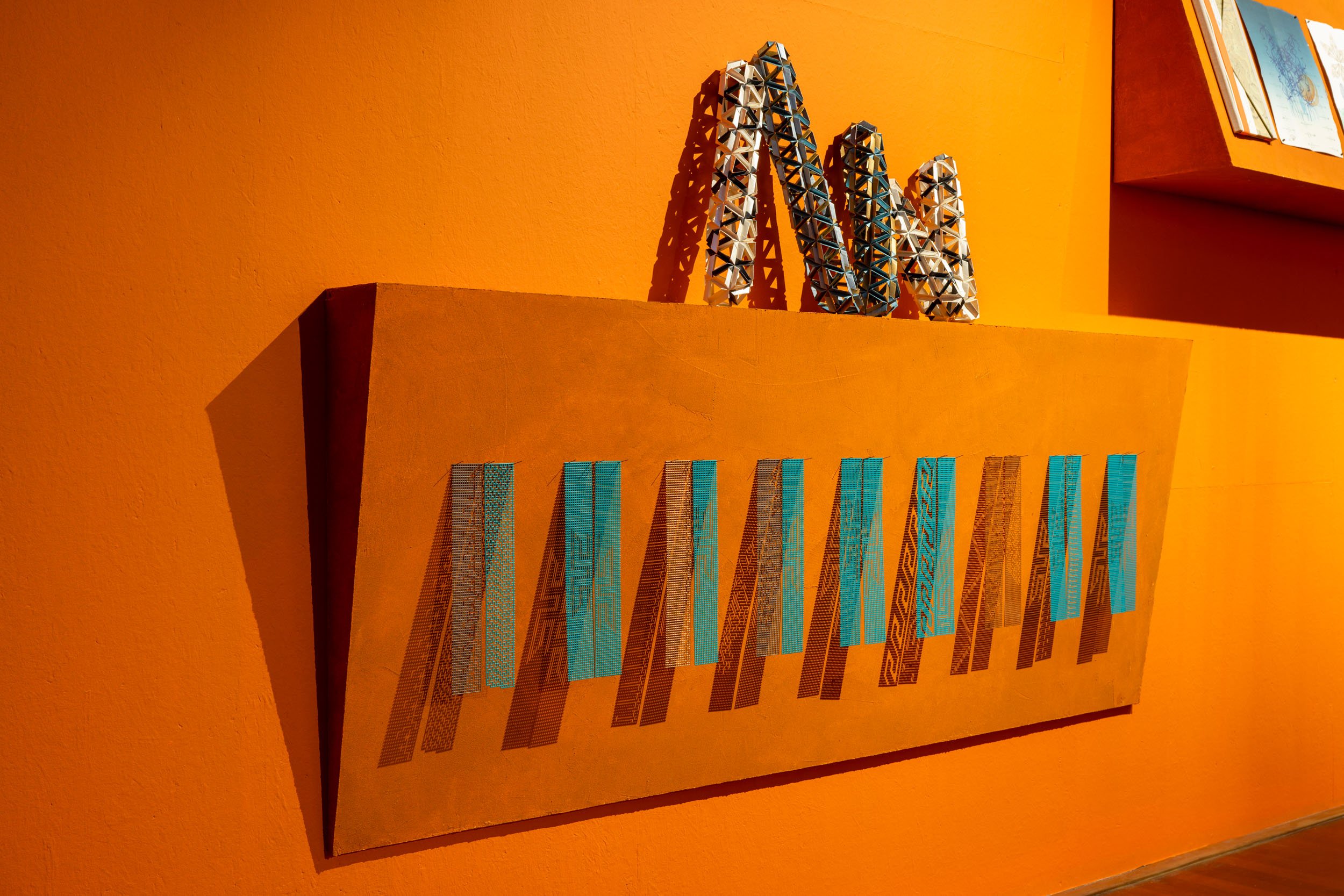
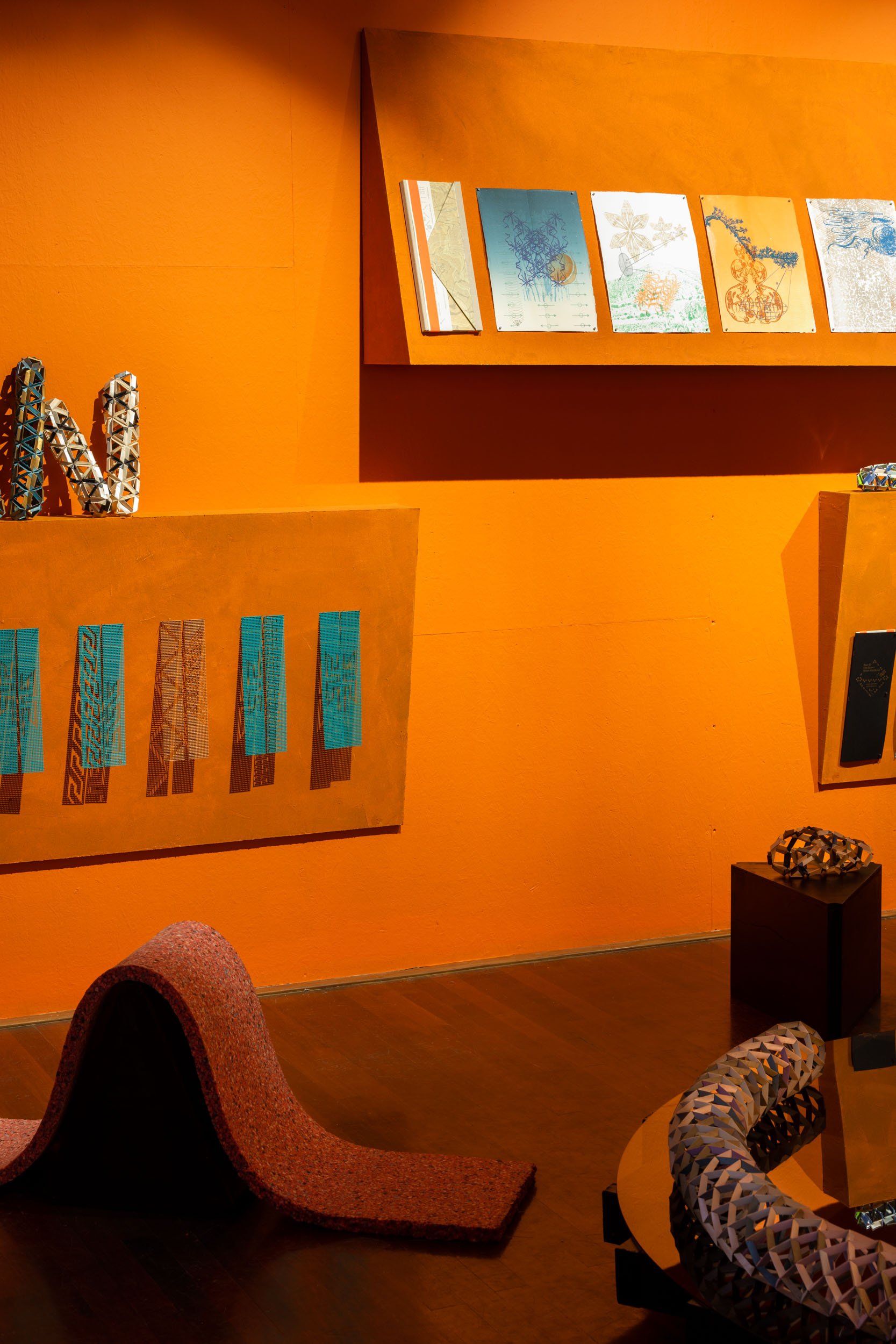
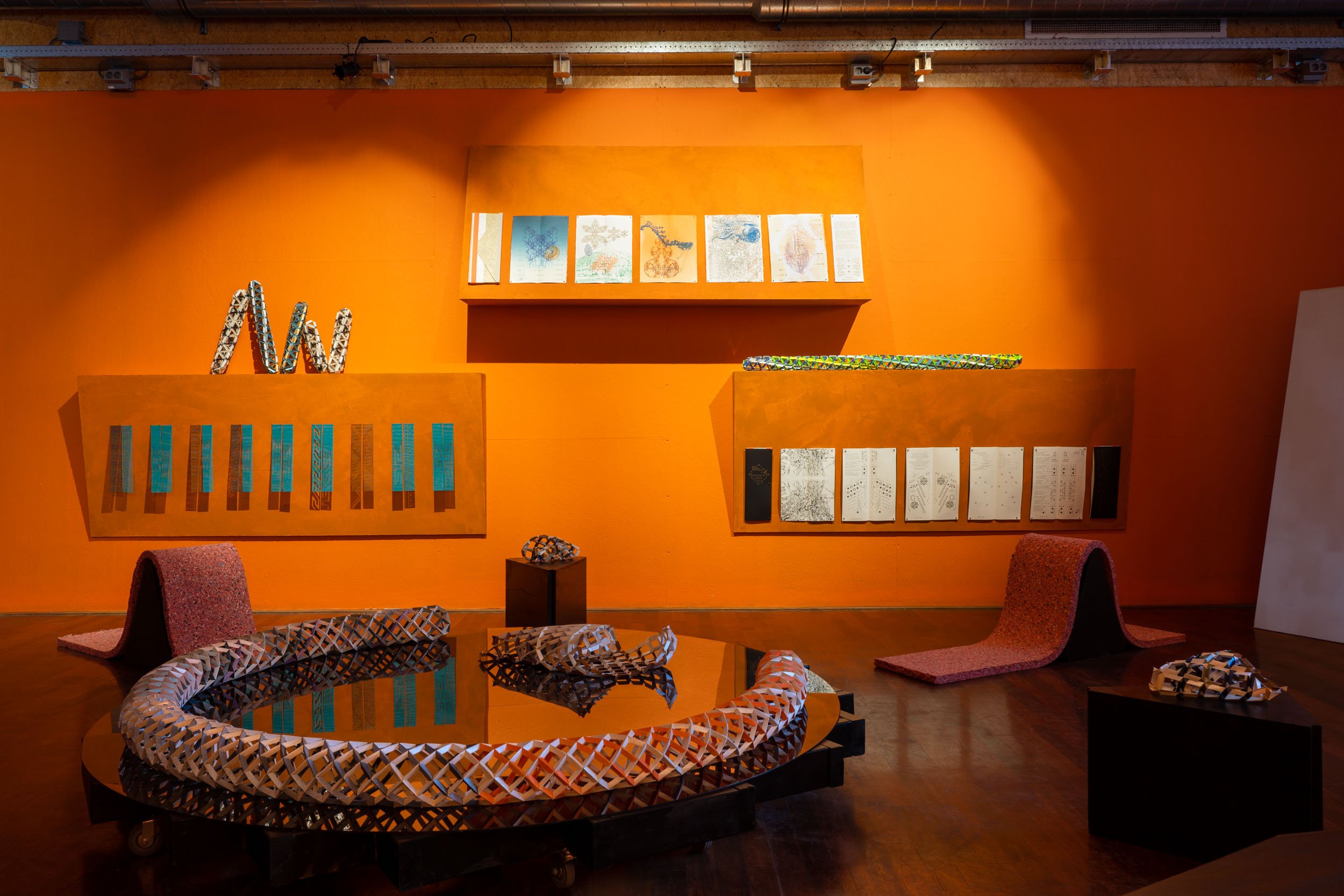
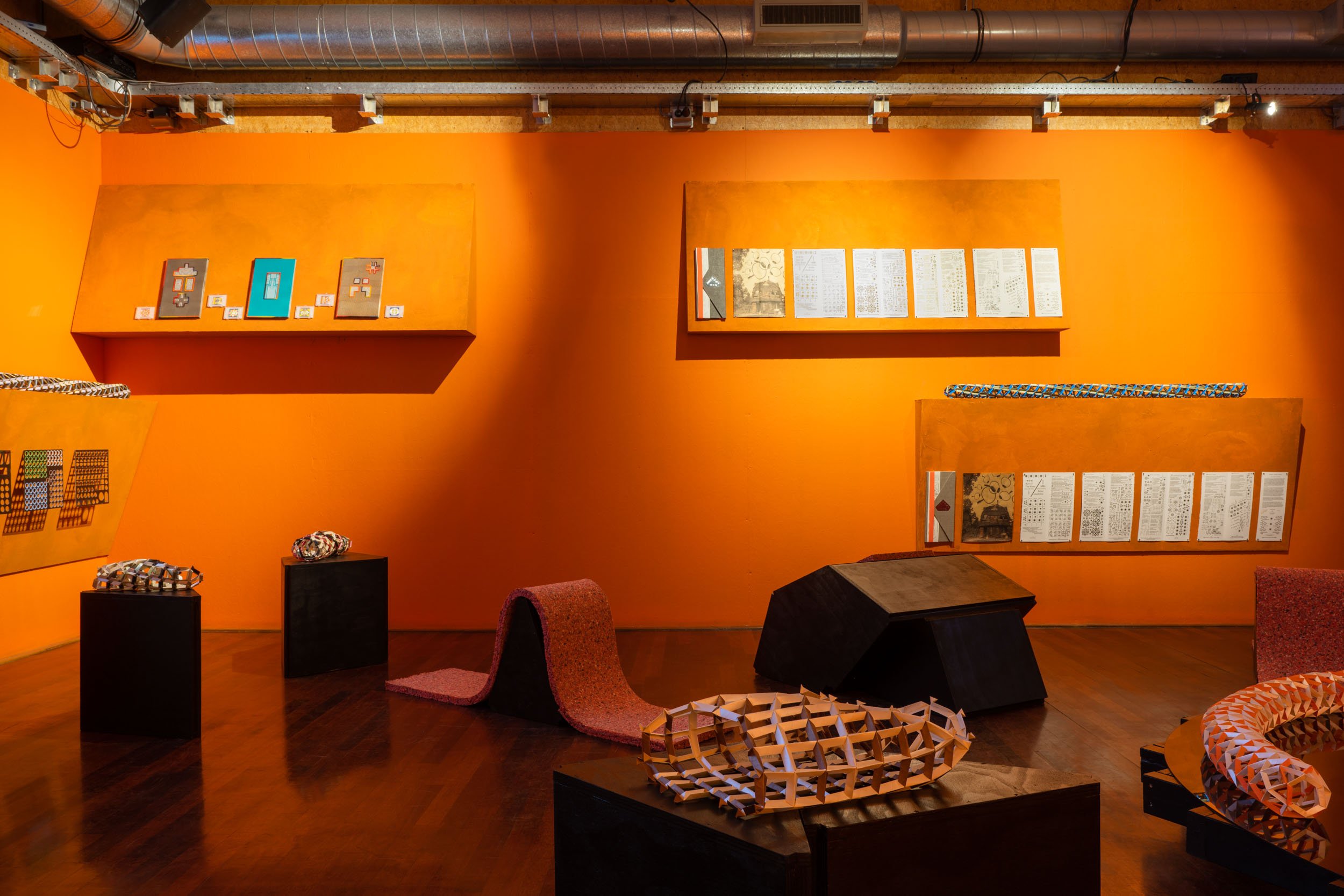
A Cooling Nest. . . is a microcosmicroom (or a pocket universe) for classes of study and rites. It contains different languages—publicationsculptures—as a gateway to kinds of knowledge drawn with the body, in collaboration or cultivated solitude, with transparency or in private. This knowledge is broadcast through different matrices in printmaking and waves of sound and light. Pockets of sub-universes are arranged to allow for certain relationships to take shape within it and because. It’s a library of sorts, an artery area, mostly cool memories, with spots of far infrared heat as color. People don’t interpret heat in the same way, but comfort, to me, is a cool temperature.
MICROCOSMICROOM is assembled with artwork by LINDA ZEB HANG at BAK, basis voor actuele kunst, Utrecht NL.
GOOF KLOOSTERMAN
Collaborative MICROCOSMICROOM exhibition scenography
THOMAS TAWANDA ORBON
JANGLE film production, editing and sound
TOM PHILIP JANSSEN
MICROCOSMICROOM installation photos
LINDA ZEB HANG
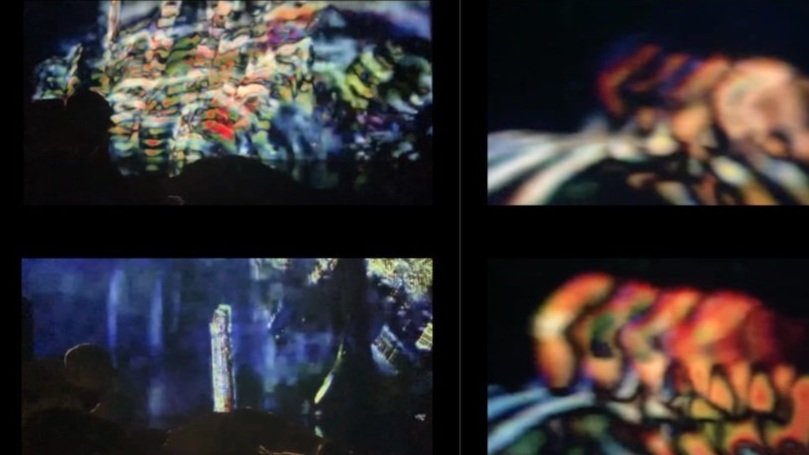
JANGLE, 2023
1:27 min.
Single-channel video installation
BW and color, stereo
Director: Linda Zeb Hang
Production, editing, sound: Thomas Tawanda Orbon
Twenty years after leaving my childhood home, I returned carrying the lives I had lived elsewhere. My mother welcomed me as someone crossing back into an older current of family and collective memory. She performed a healing fire ritual—an ancestral act of cleansing, protection, and renewal that included the sacrifice of a chicken. As she sang, the metallic jingles of a shamanic instrument filled the air with a rhythm that seemed to awaken generations.
Later, I unearthed a recording of myself singing from poetic enjambments. A friend overlaid our voices: my mother’s voice singing in our ancestral dialect, accompanied by the sound of her instrument, alongside my own voice in english. Together they became a conversation across generations, languages, and sonic structures. The recording is both a family document and an act of continuity—a way of honoring an animist tradition and language that continue to disappear with each passing generation.
The ceremony became more than a homecoming. It reminded me that memory is not only preserved in books, archives, or photographs. Sometimes it survives in ritual, in song, in the cadence of a language, and in the sounds that one generation offers to the next. If my grandmother carried history through surviving a river, and my mother carries it through ceremony and music, then I have come to understand my own work as carrying those histories into installation, publishing, and visual art, so that what is fading may continue to find another voice.
I dance to remind.
I will create as I speak.
I seek the simple and interpenetrating shapes. Processing with imagination, I’m interested in who, how and what gets left behind.
My research is built from resourceful memory, in which orality is a primary cultural script. The frayed, layered aesthetic language of my reprographic culture is not fixed—I can reinterpret, repeat, distill, generating a mixed-media synthesis.
For me, the hinge in comfort and grief holds density in texture. Geometry in sound and voice soothes this altered condition of life.
Linda Zeb Hang
Spring Equinox 2023
A GARDEN IS A BODY THAT CANNOT BE POSSESSED
ITS SECRET IS BEAUTIFUL BECAUSE IT BELONGS TO NO ONE
THOUGH SOME HAVE EXPLOITED IT
ITS TRUE NATURE CANNOT BE CONTROLLED
Linda Zeb Hang
Rotterdam / The Hague NL
June 2026
In 2022, two artist-printers finished a difficult, labor-intensive book during and after the New York City pandemic. Nobody knew what would happen. Keith Graham’s reflection writes about fear, upheaval, friendship, labor, and endings. The unpulled poem disappears from the public version. The collaboration dissolved. The city changed. People moved. The pandemic receded. Relationships transformed. Life scatters everyone.
And then, years later: a librarian remembers the work. A museum selects it. A curator includes it. A workshop grows from it. A nomination carries it forward. Students encounter it. Collectors ask about it. The book keeps appearing, like a message in a bottle that never stopped washing ashore.
Then one day I found the poem again. Like discovering a pressed flower inside an old book. The flower is no longer alive, but it still carries the shape of the season.
Run O’ The River / Bitter Medicine trilogy profoundly shaped the trajectory of my practice. Since its publication, the work has brought me to Detroit, the Netherlands, where I now live, onward to Belgium, France, Norway, and a prospective Asia in 2027. Its creation became my passport.
The Linda who moved between California and New York, spent late nights printing, survived the pandemic, and had not yet moved overseas—that person is gone, in the ordinary sense that we all keep becoming someone else.
The book is one of the few places where that person still exists. Then suddenly someone reached back into it and said, “I remember”. That is why the book can still make me weep.
In 2022, the feeling was: don’t let this printing end. In 2026, I understand that it never really did.
The chapter ended. The meaning didn’t. Run O’ The River / Bitter Medicine is named after a river. A river carries things—not always where they intended to go, not always intact, but always with momentum. Bitter Medicine is the realization that letting the moment end was what allowed the work to keep traveling.
That is what feels miraculous. 💧🙏🏽
Pocket I : Warble
2020–2021, HAND-WOVEN FIBER-OPTIC PAPER
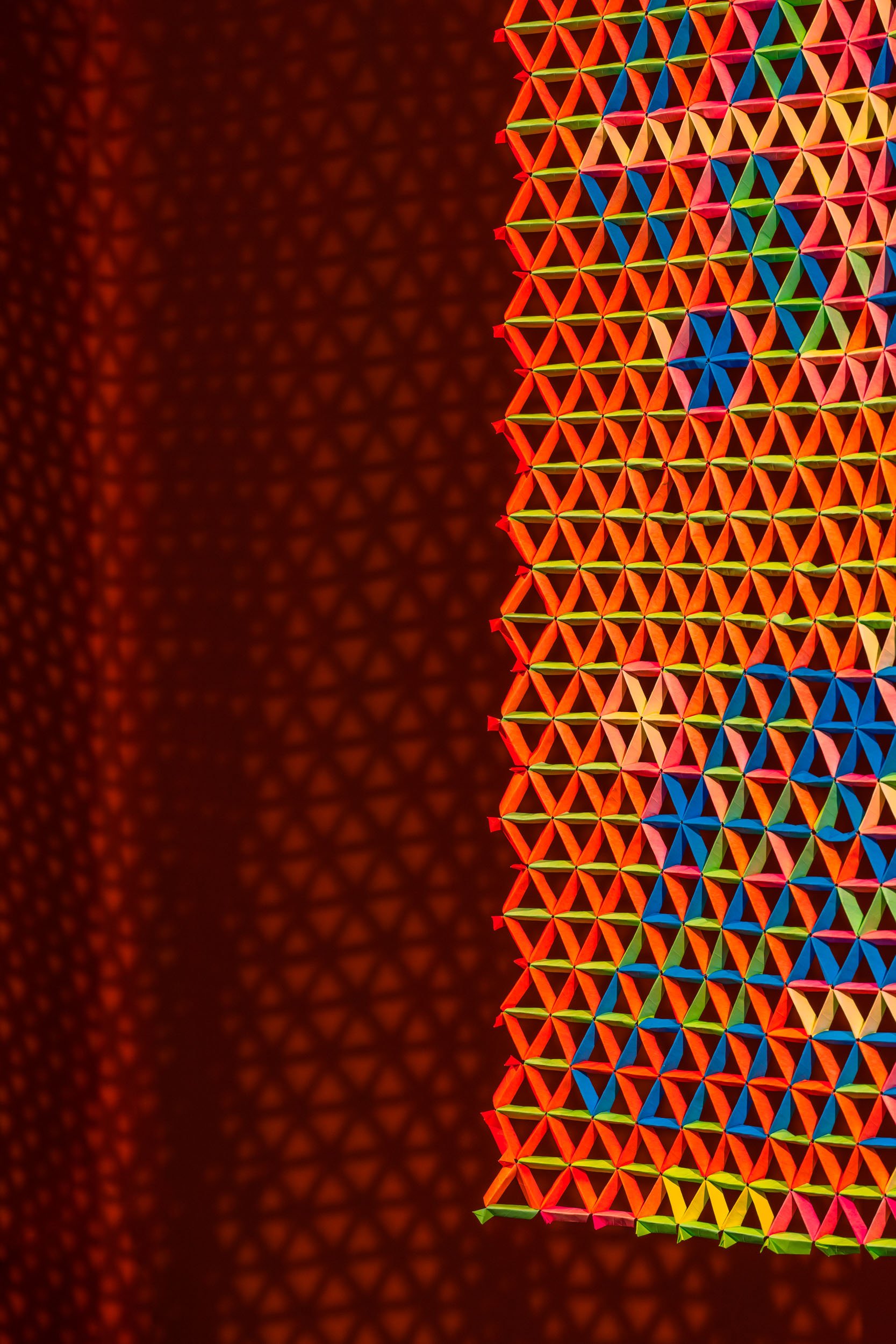
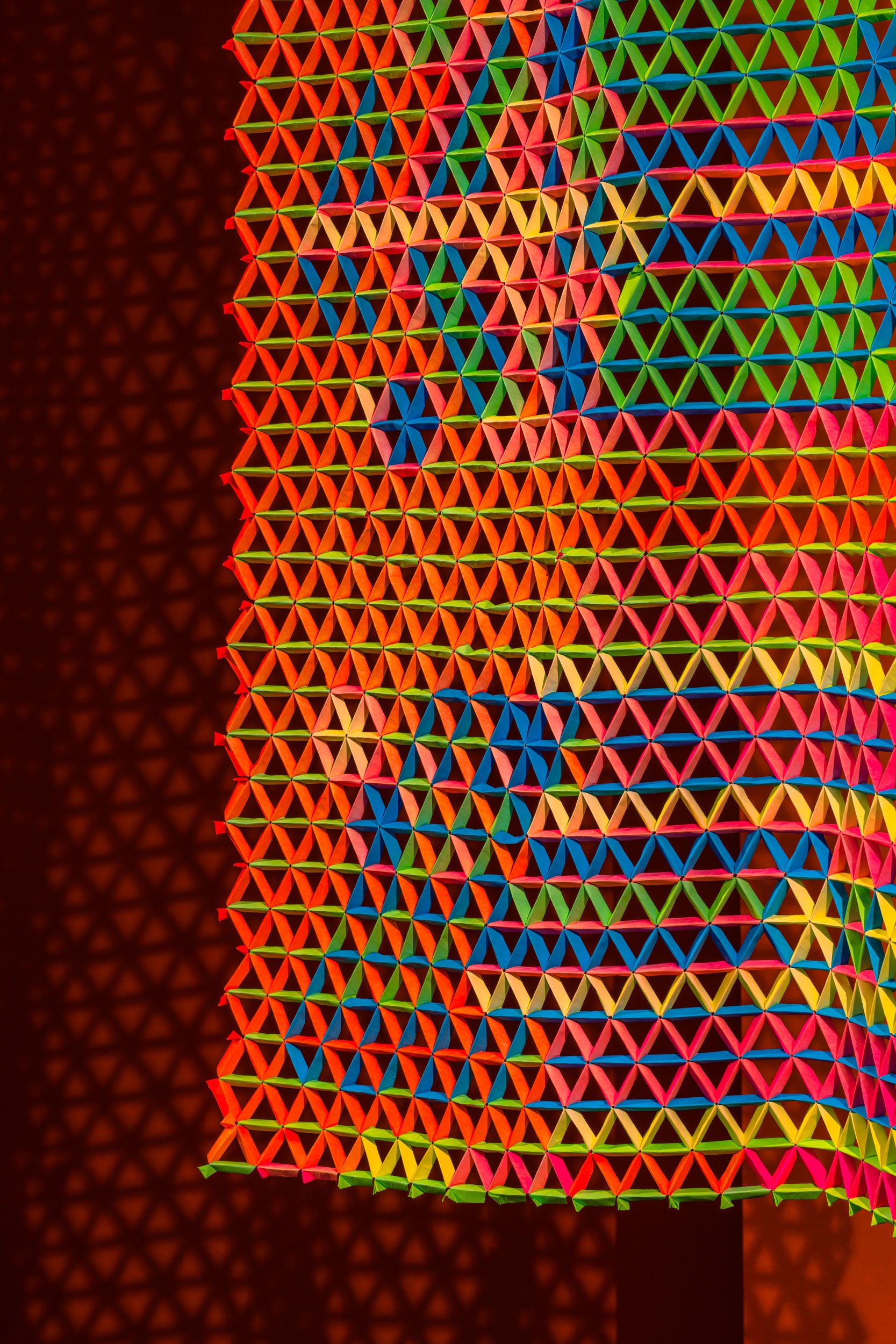
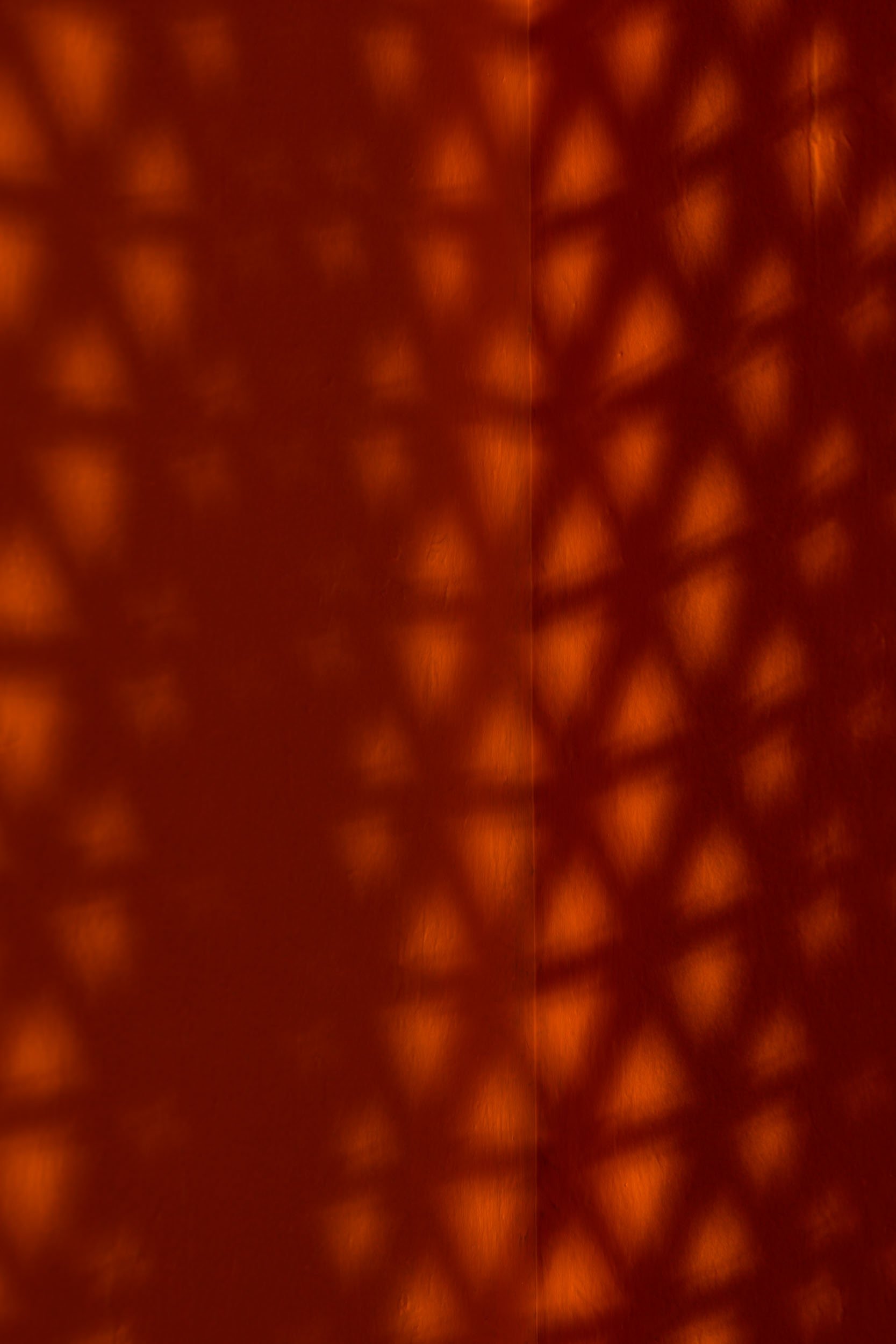
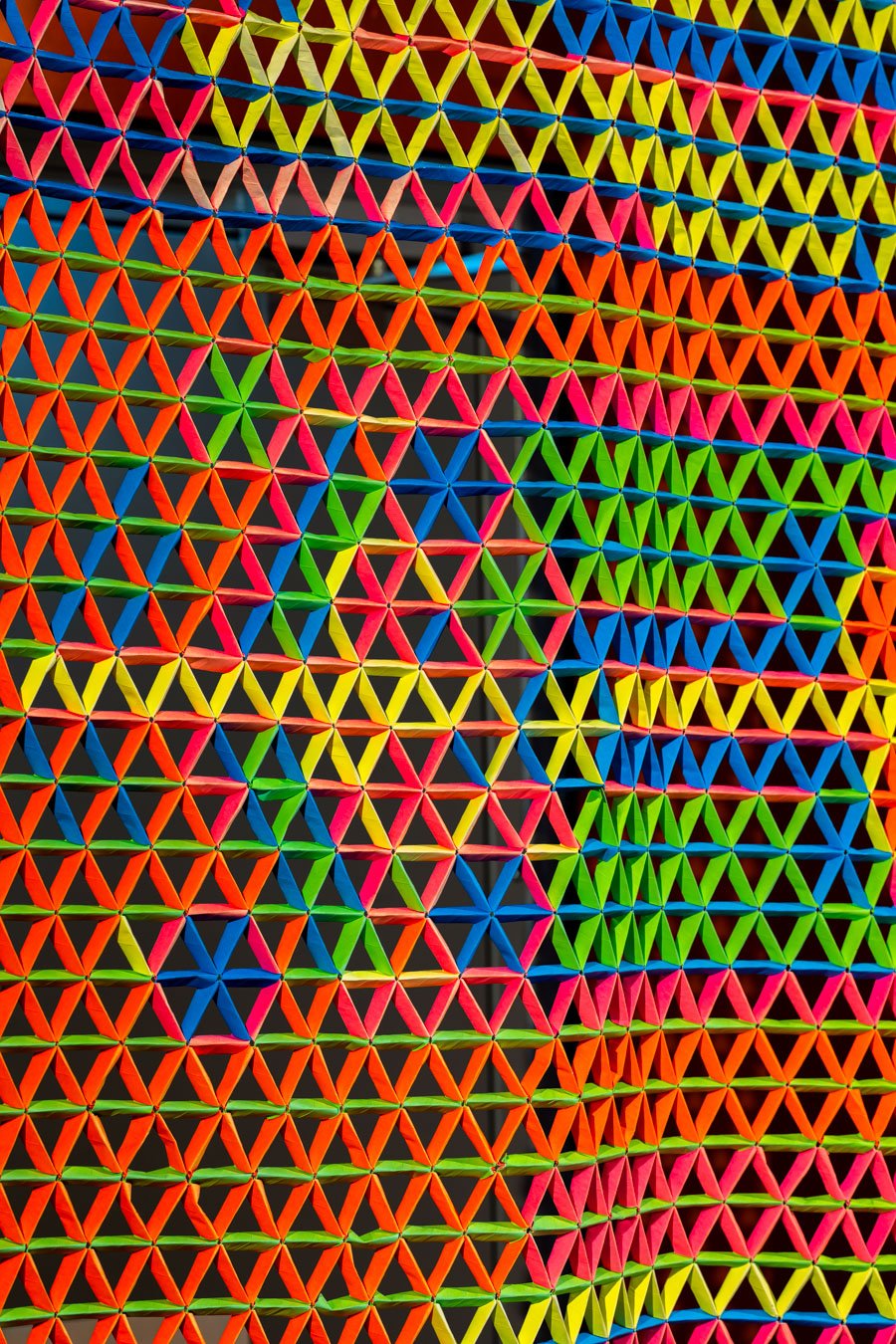
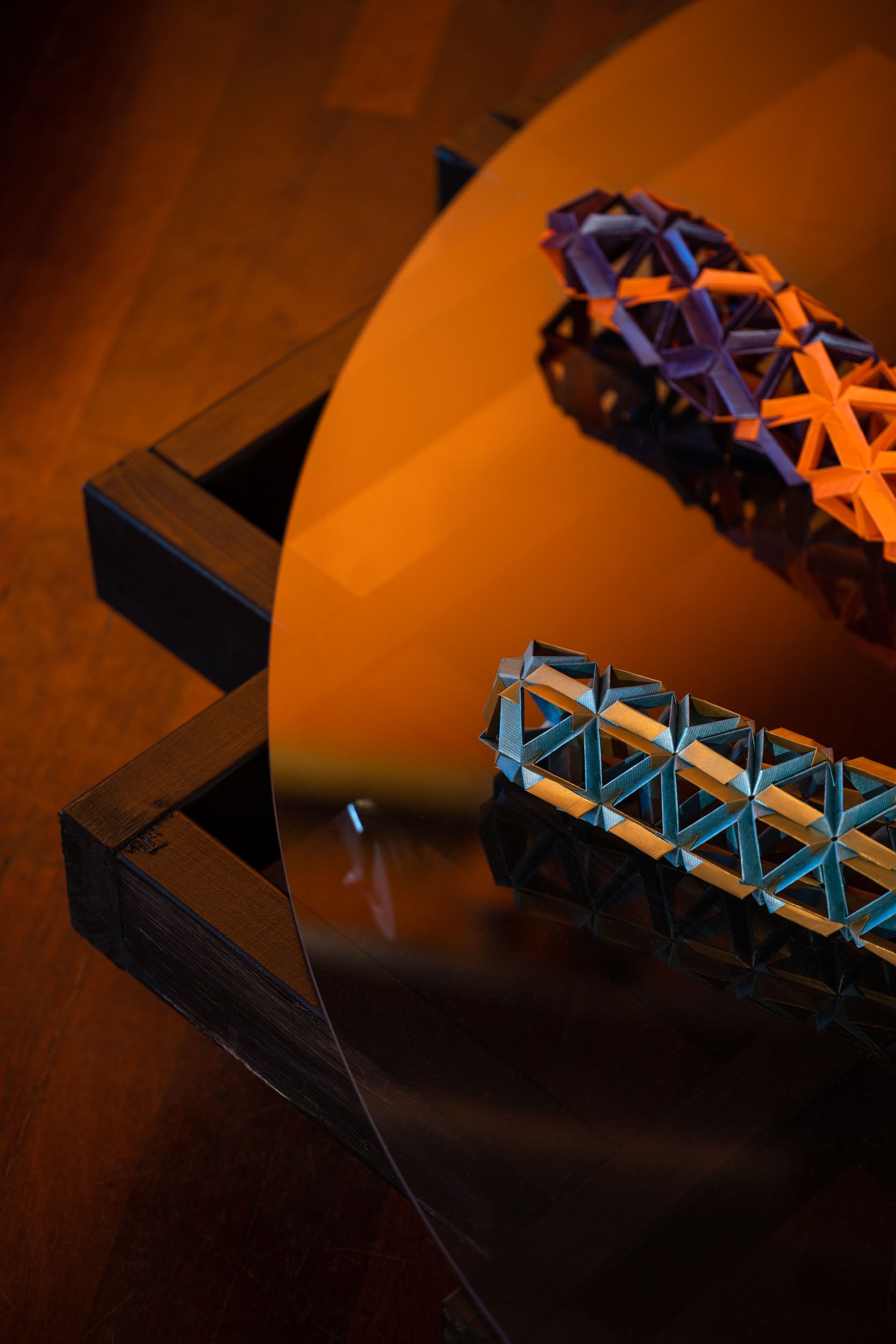
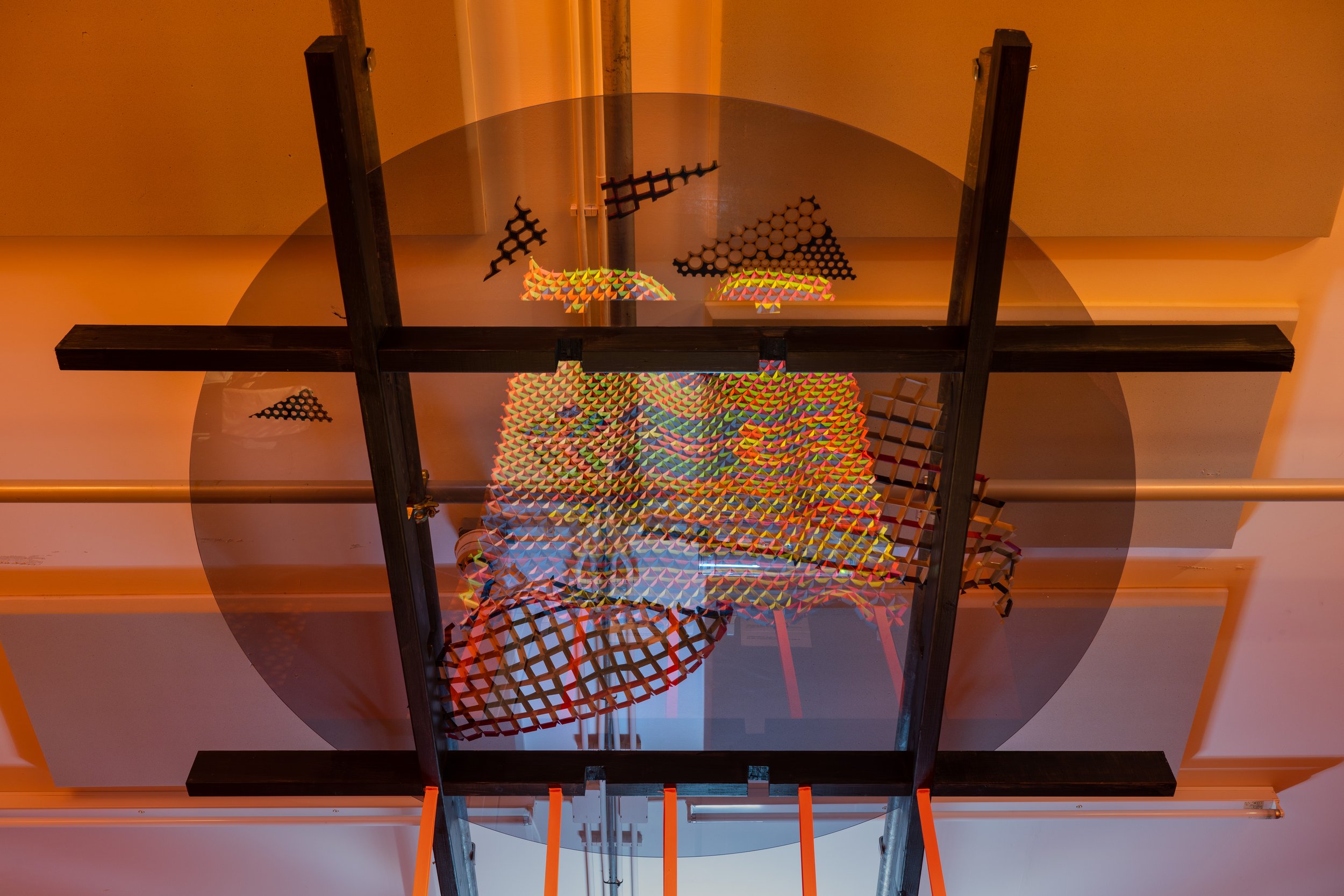
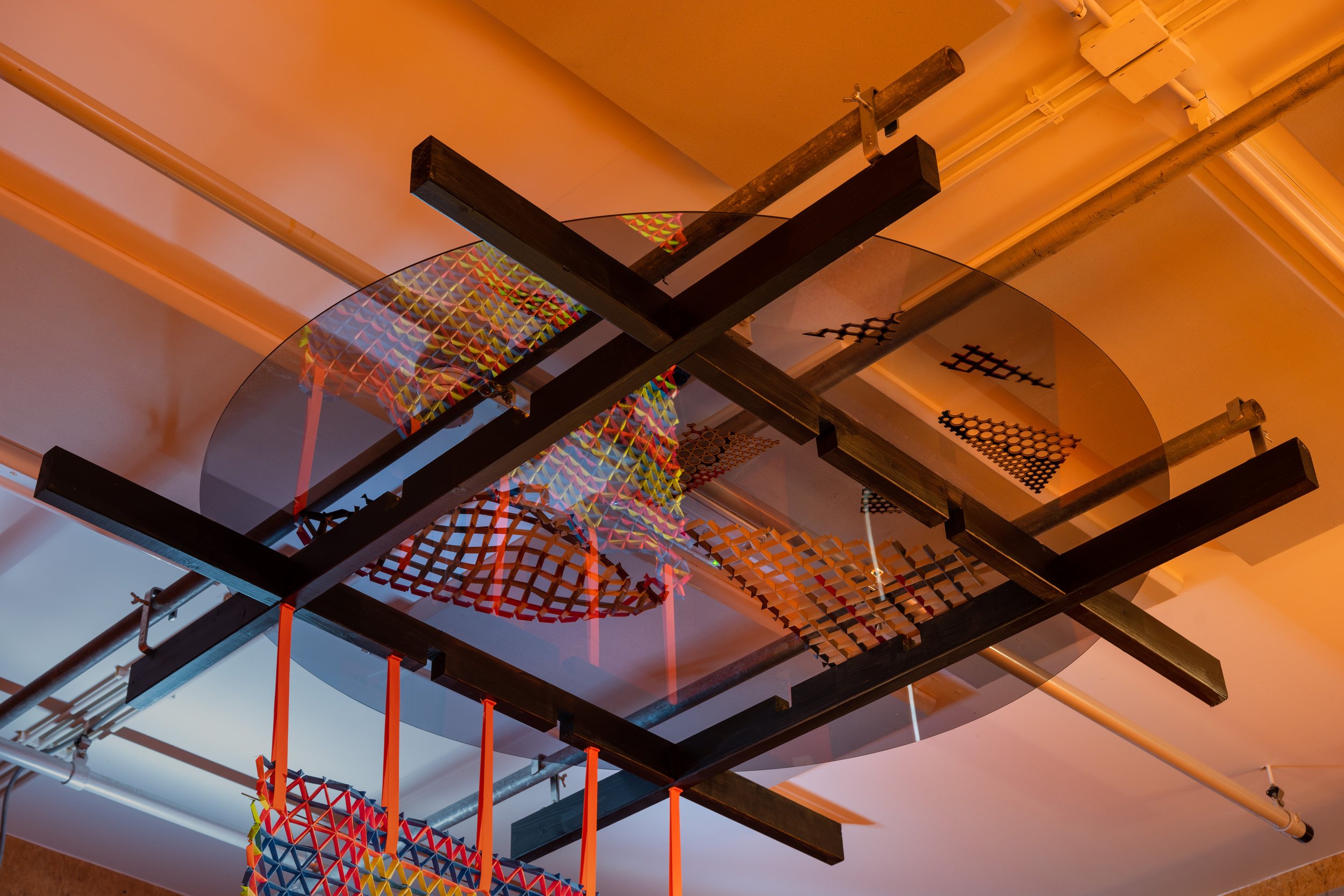
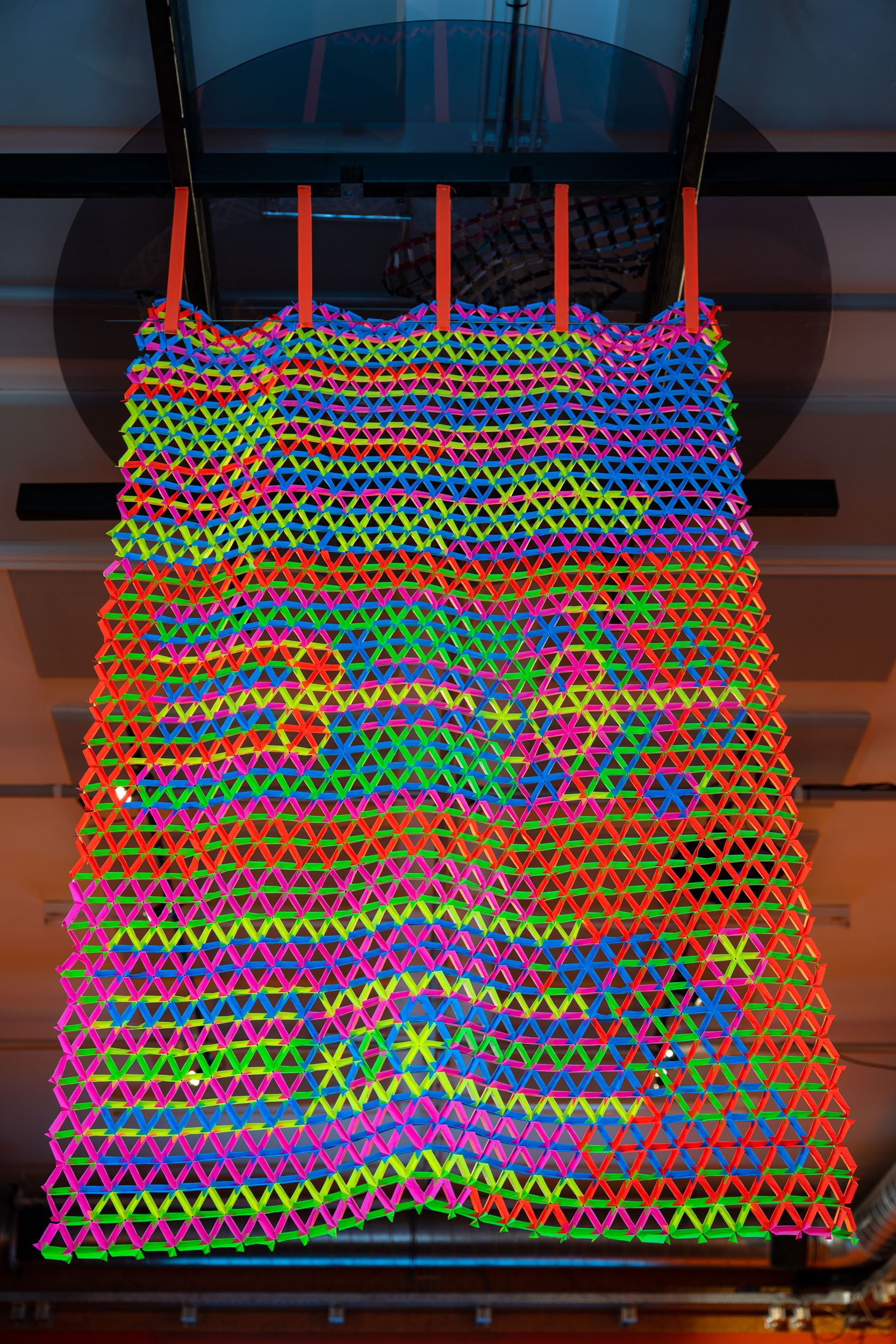
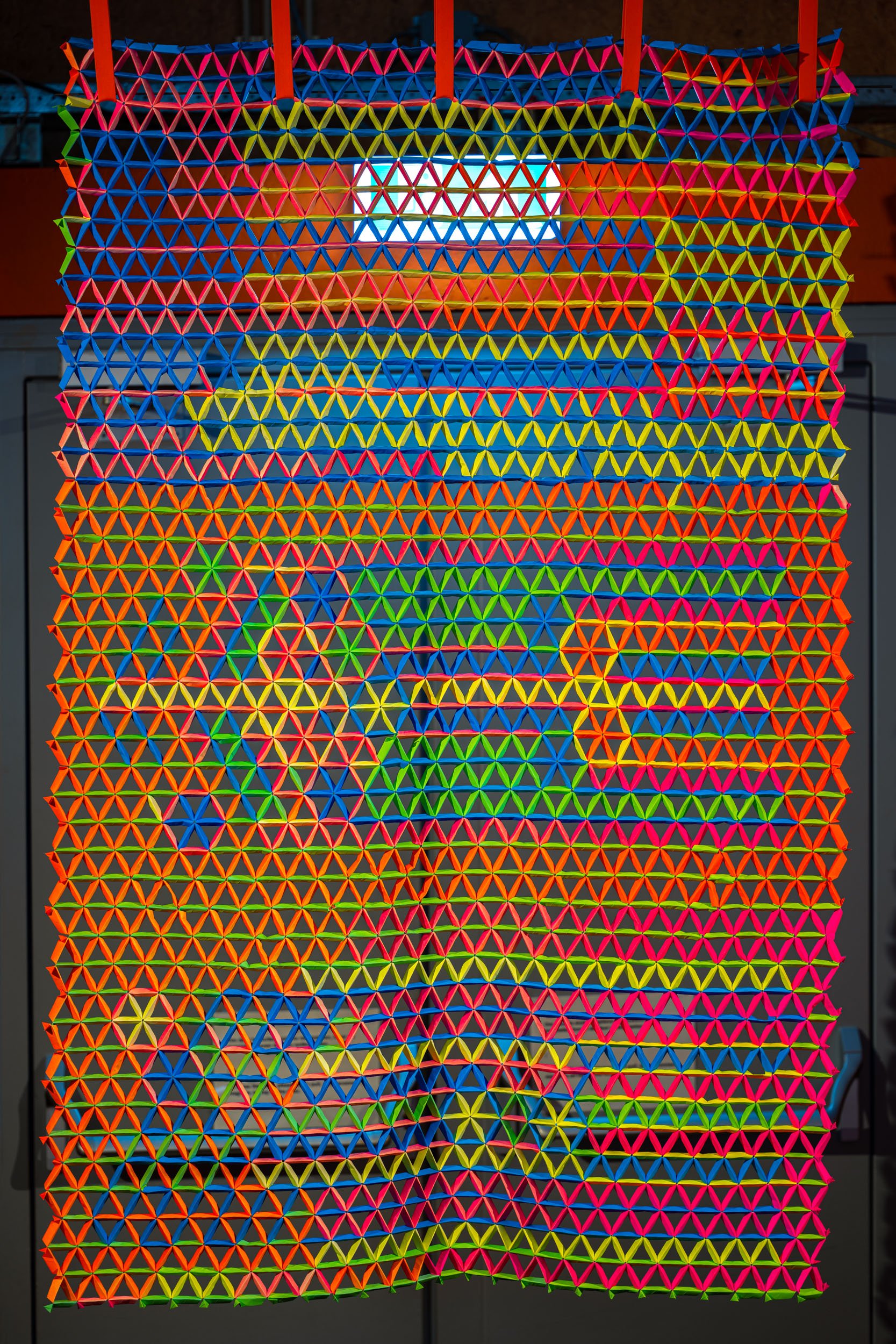
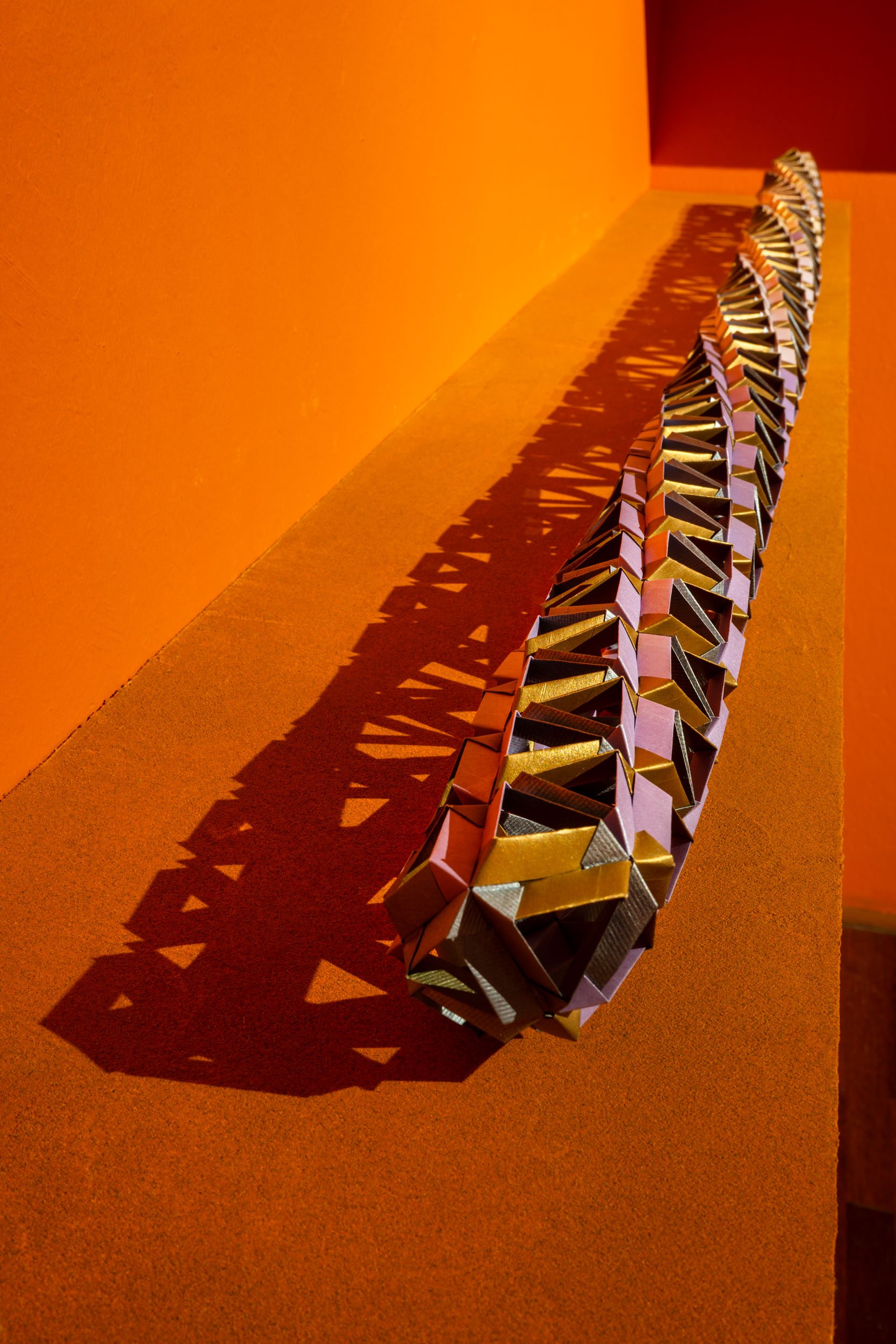
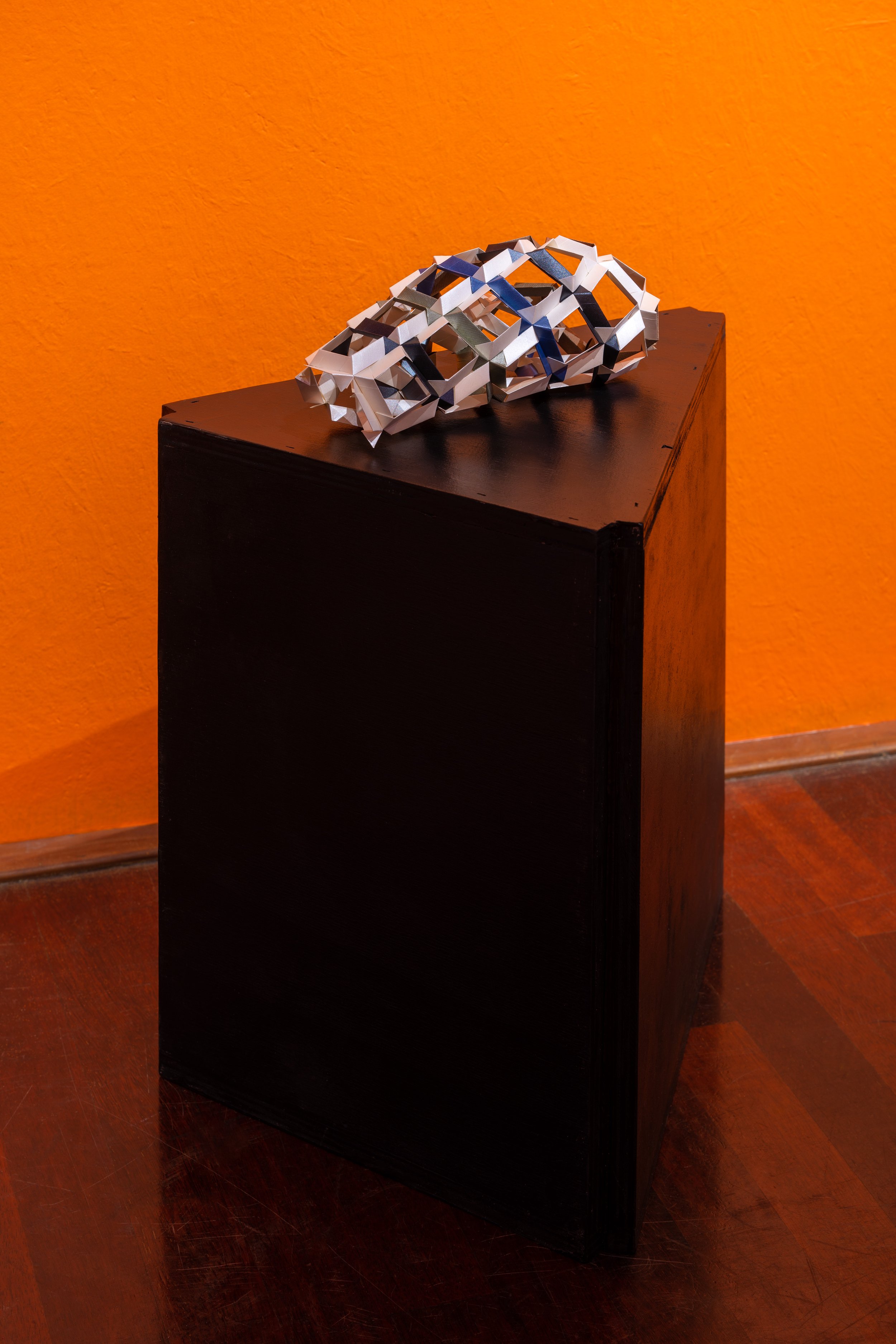
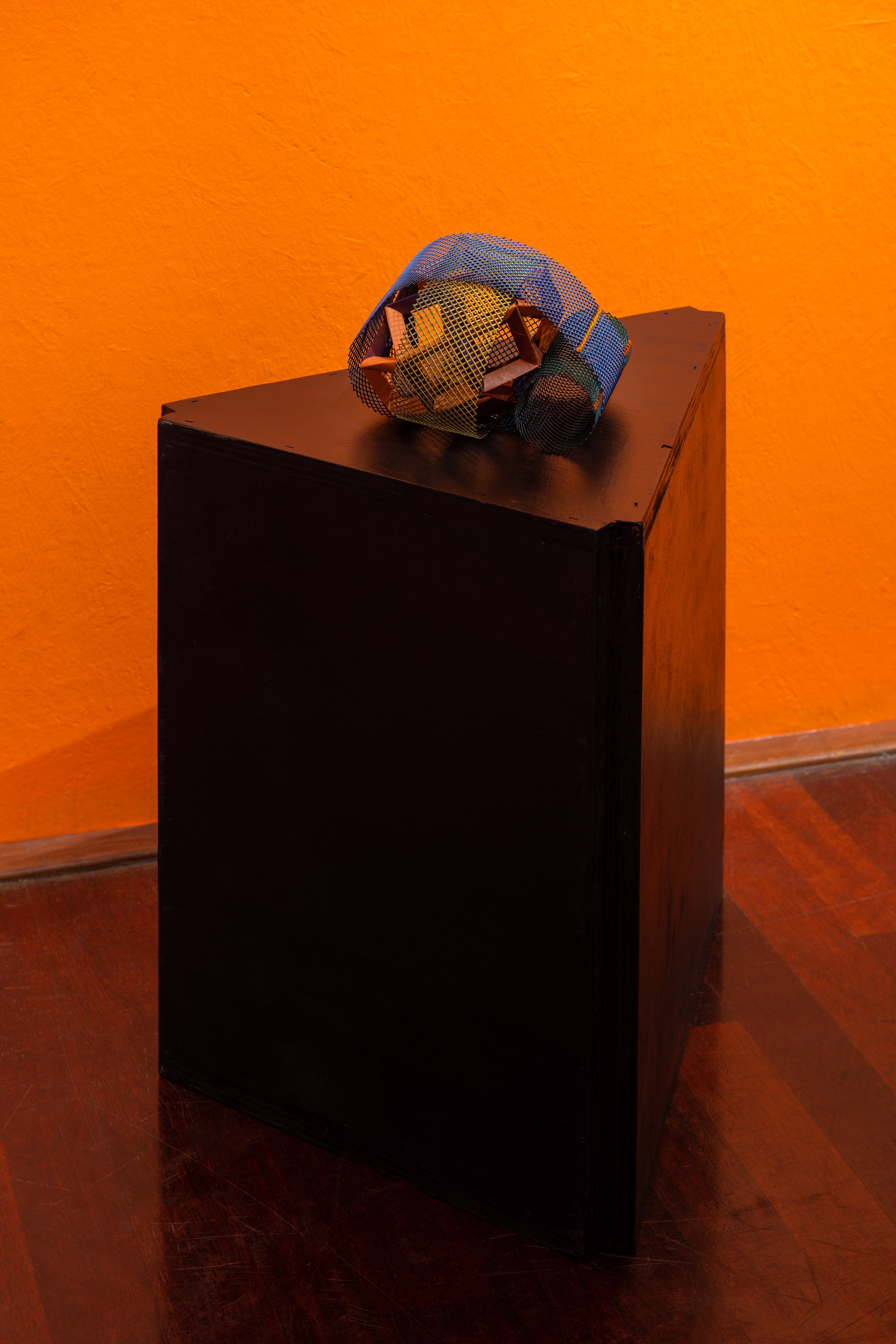
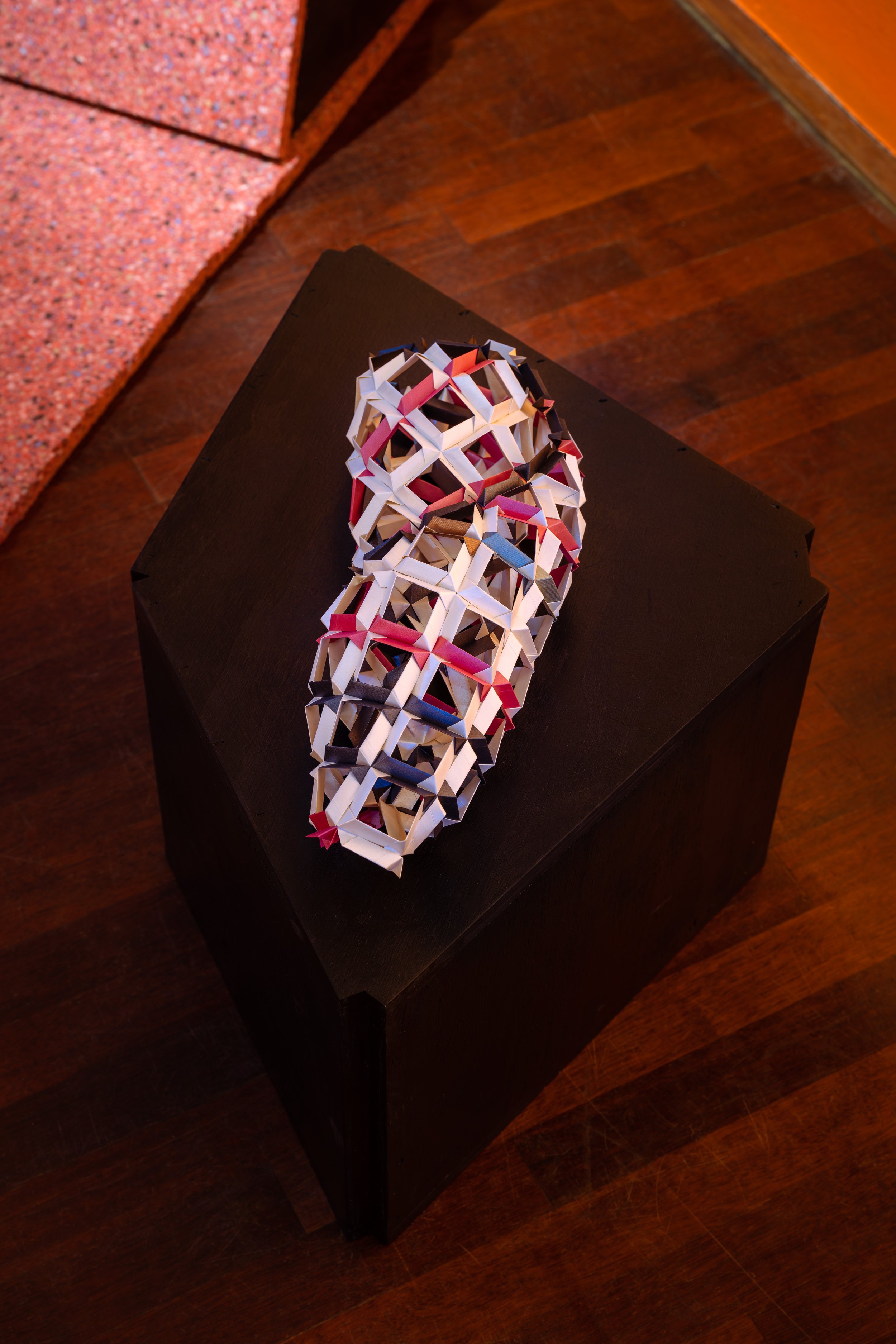
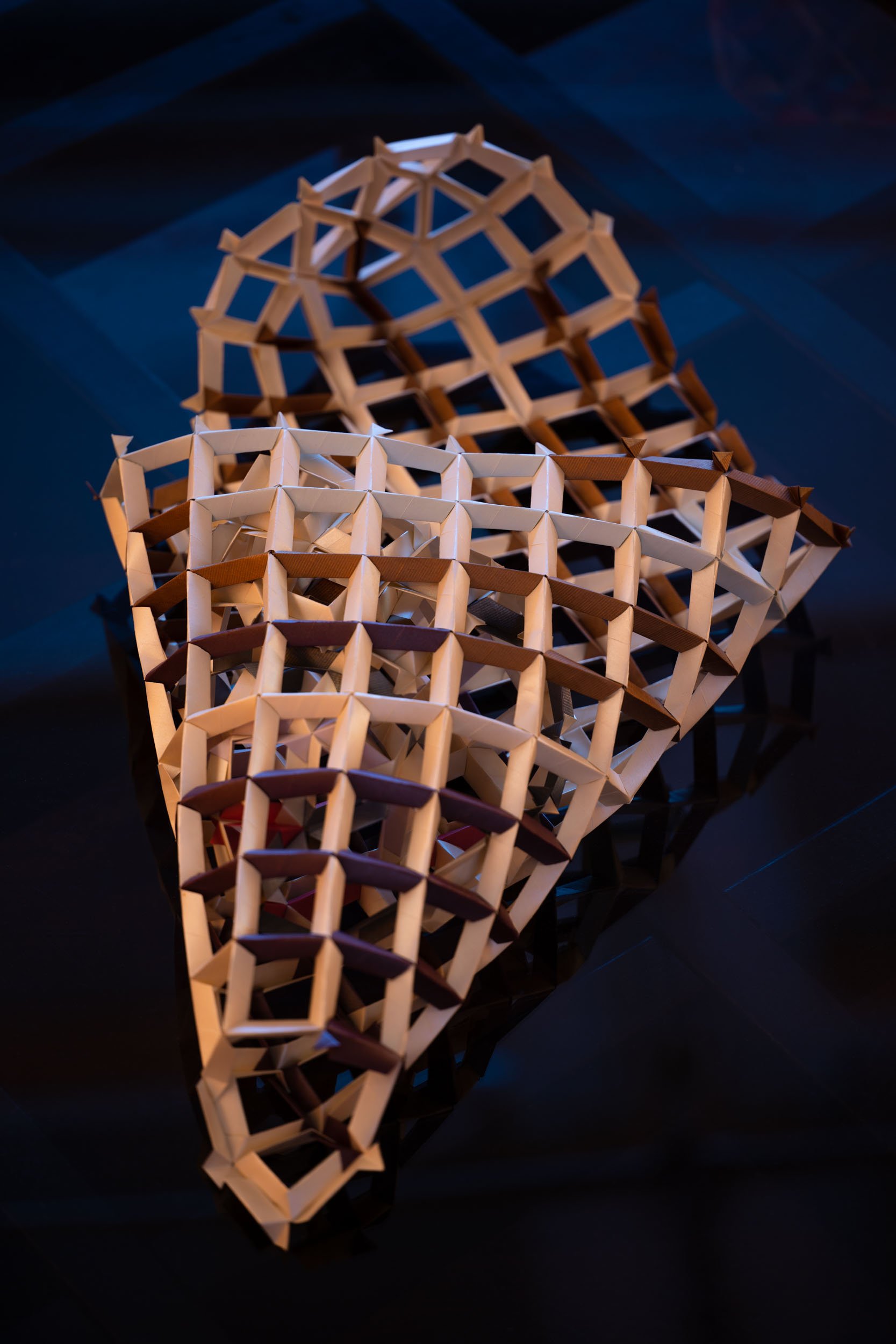
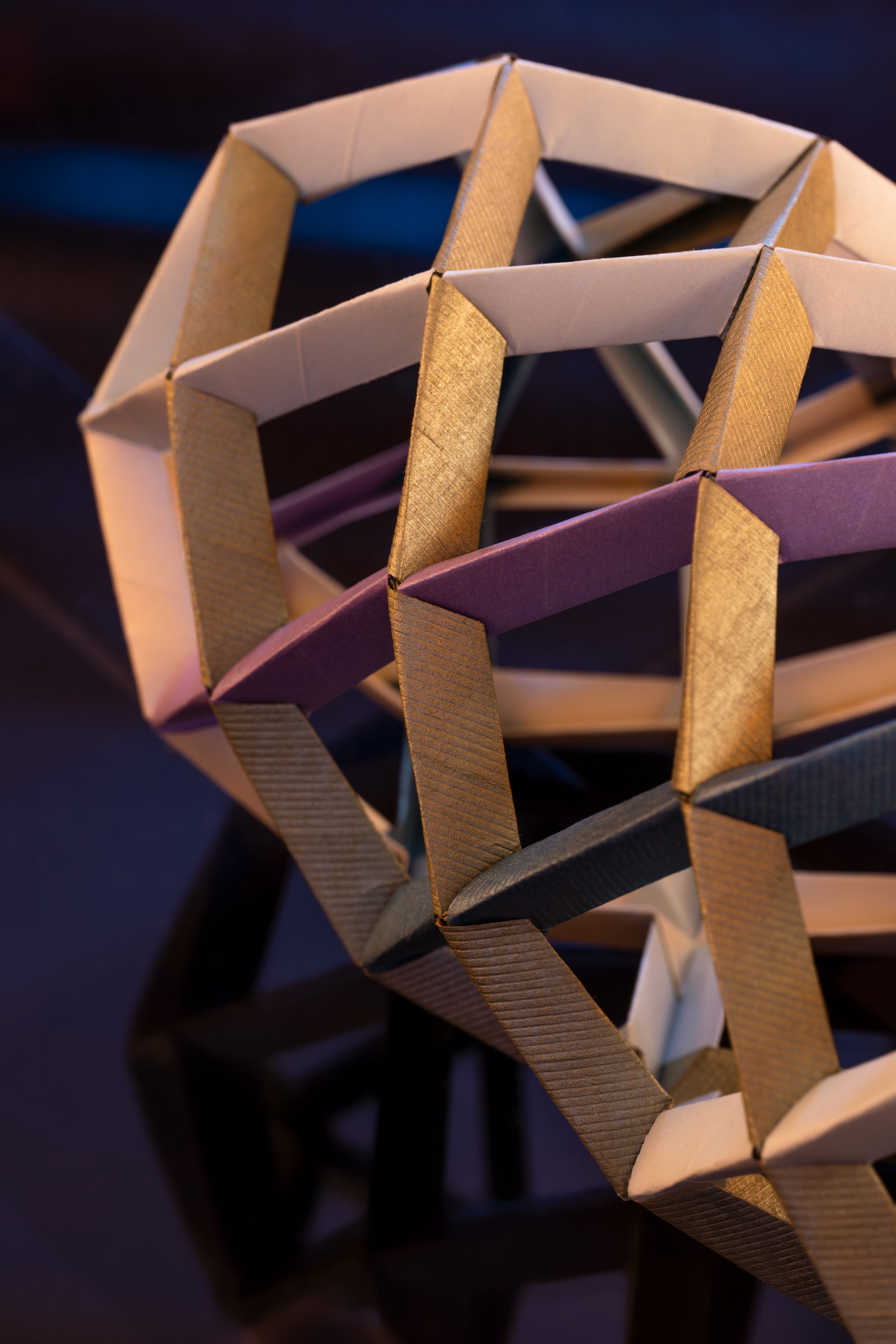
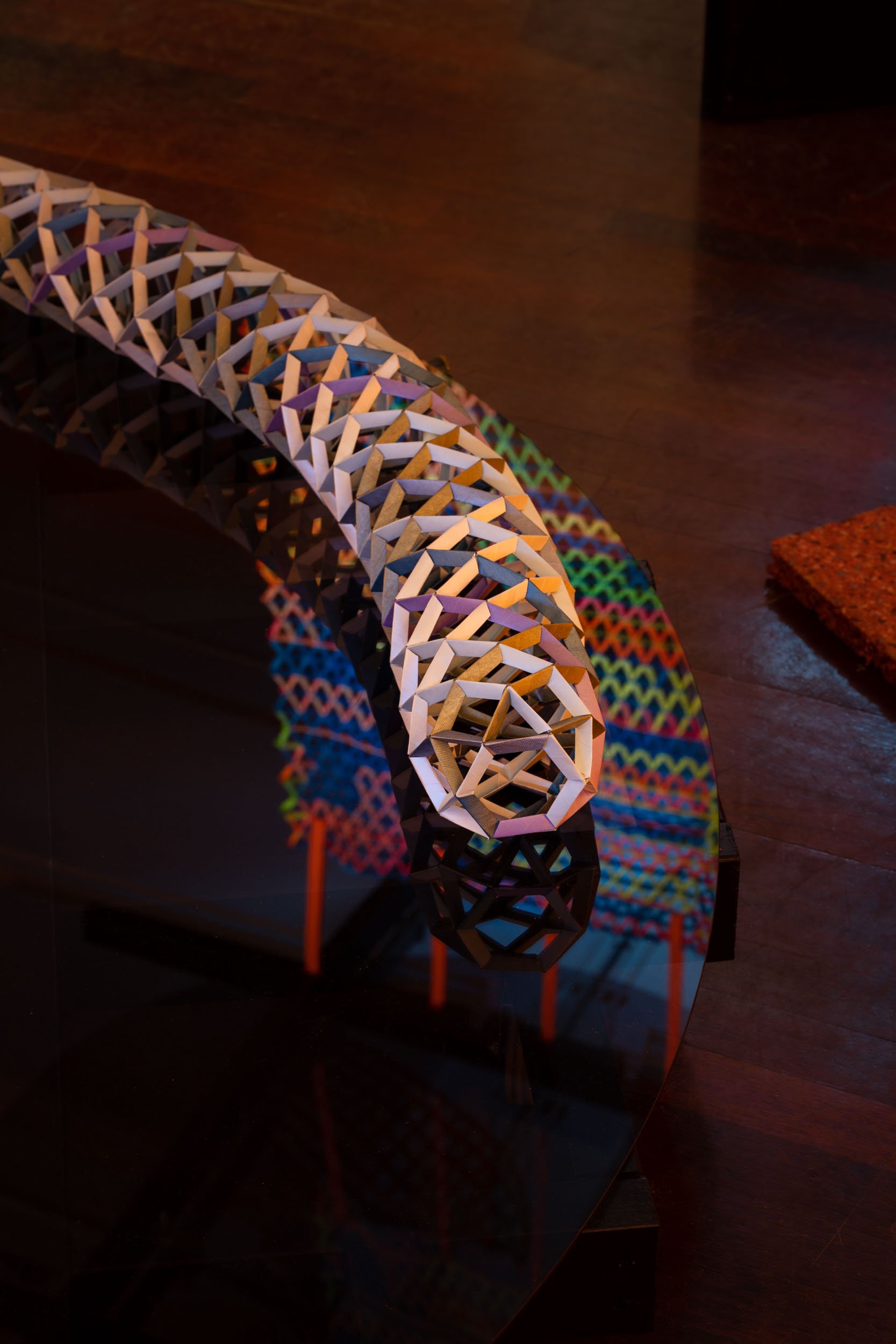
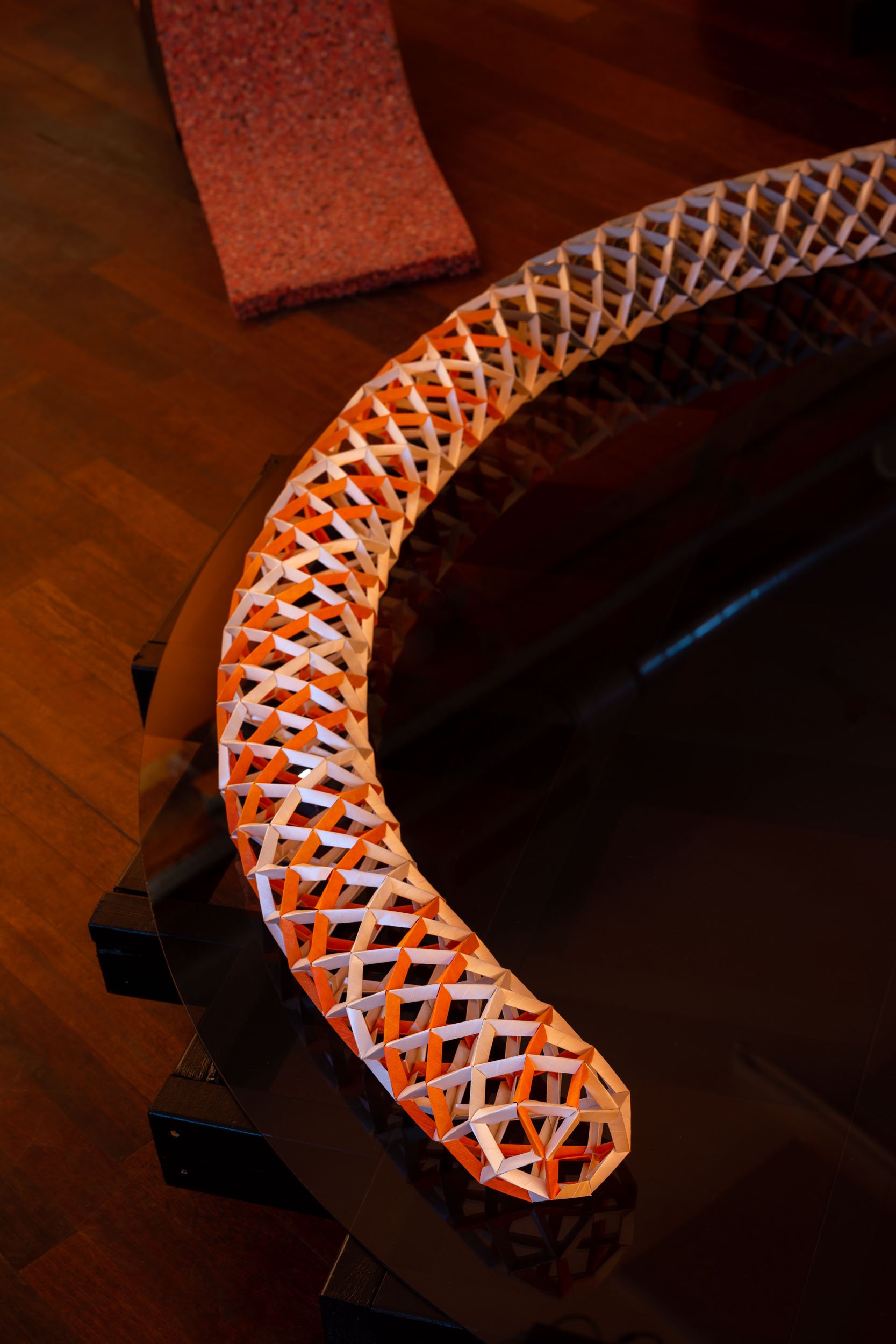
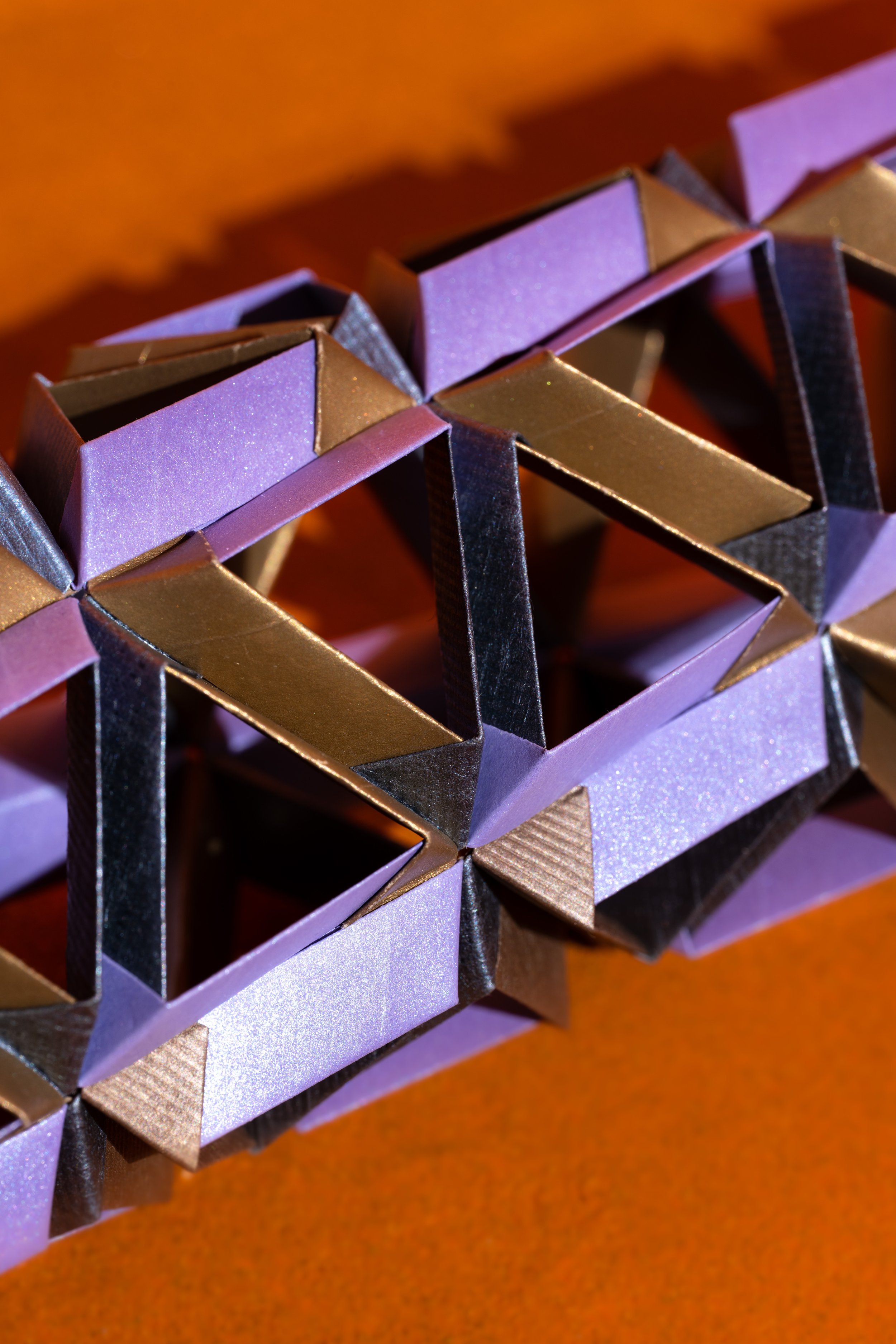
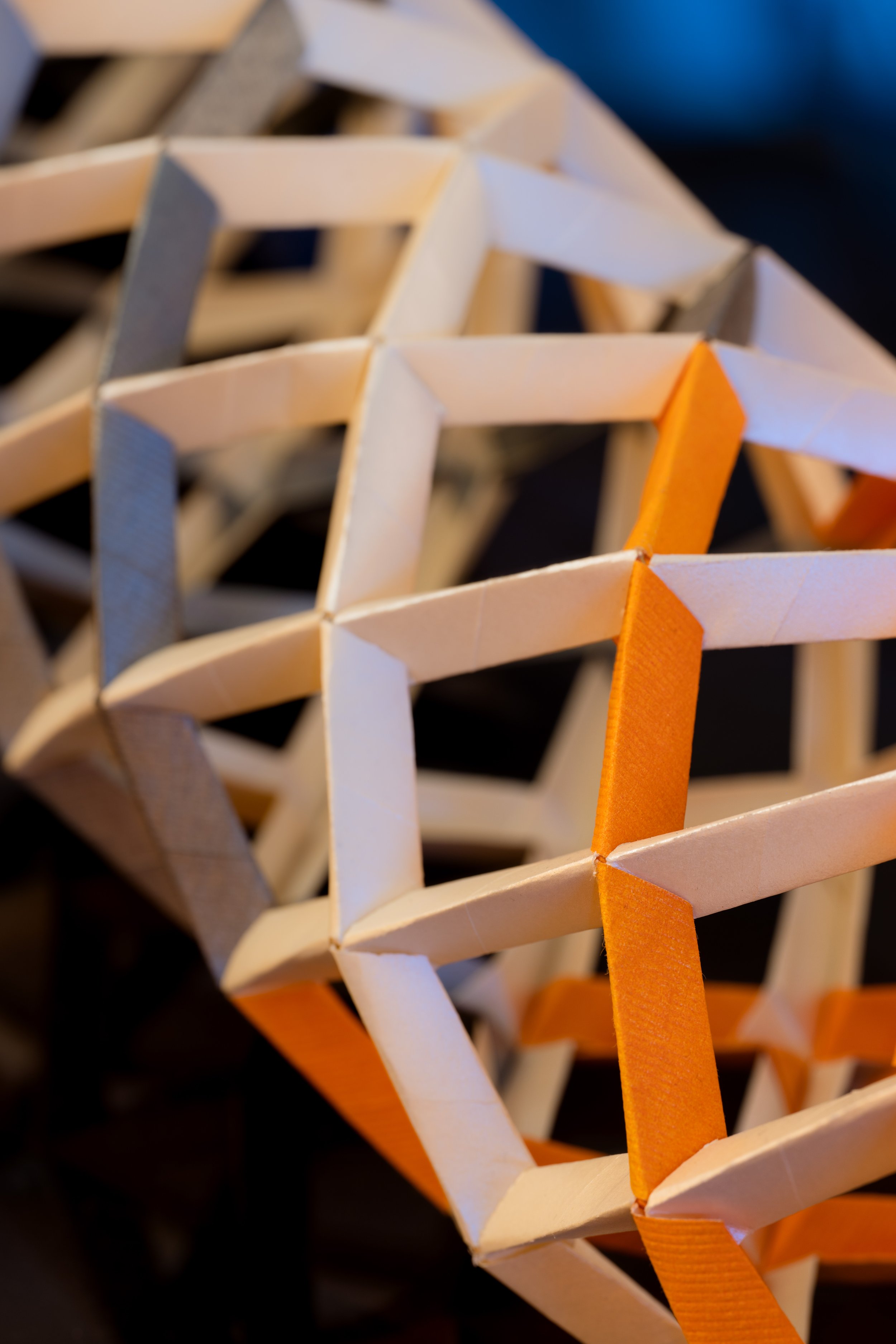
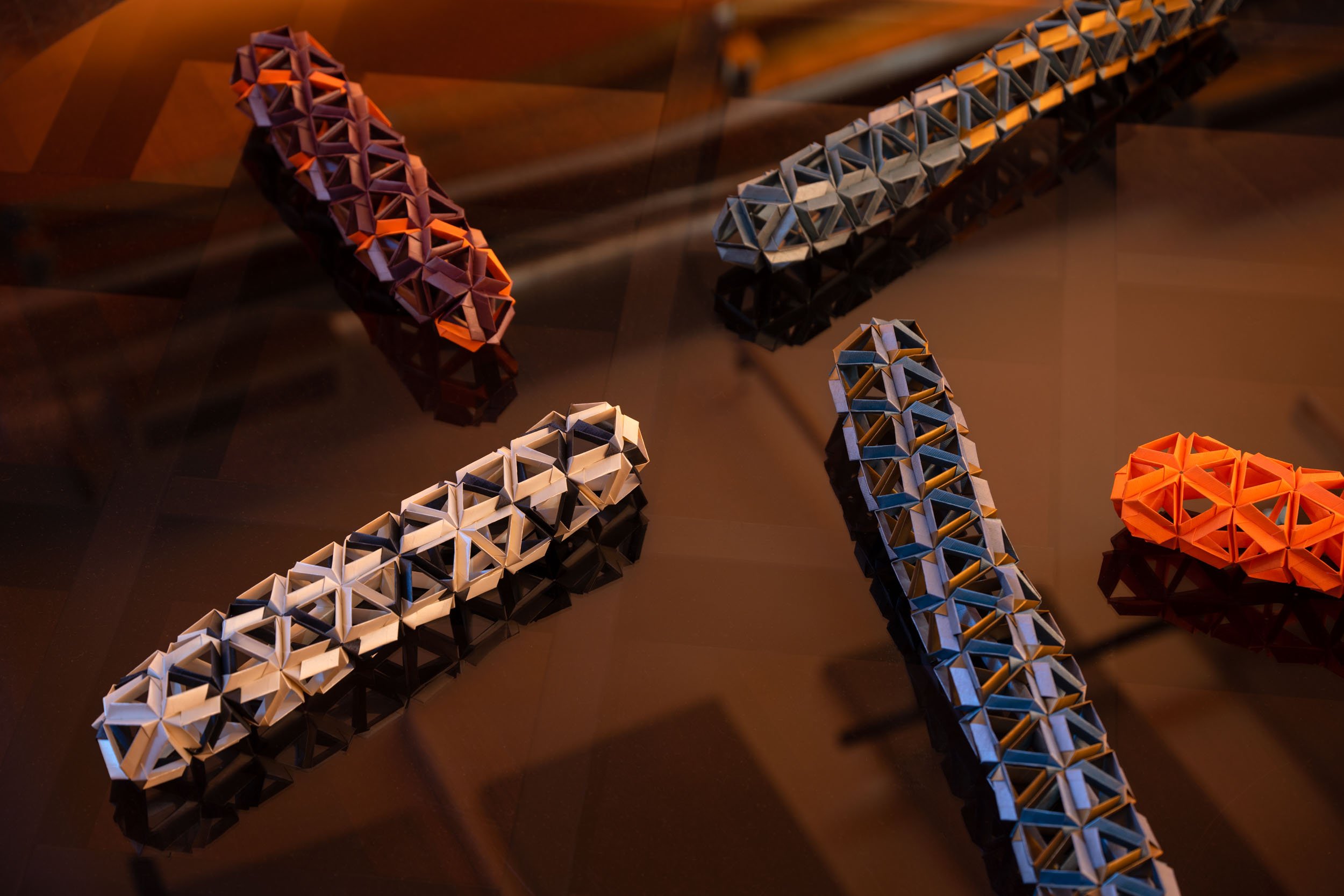
WARBLE is an artifact of intimacy, hinge, and shadow. This process of repetitious folding yields a jointed architecture held together without adhesive, through gravity. The talismans of migrant cultures place importance on woven entry points: they hold significance as a marker, symbol for an exit, an architecture for one’s return to the world. In protection, this undisclosed design forms another “eye,” or a nest for meditation and restoration. As a geoglyph, it can be thought of as a braided crater.
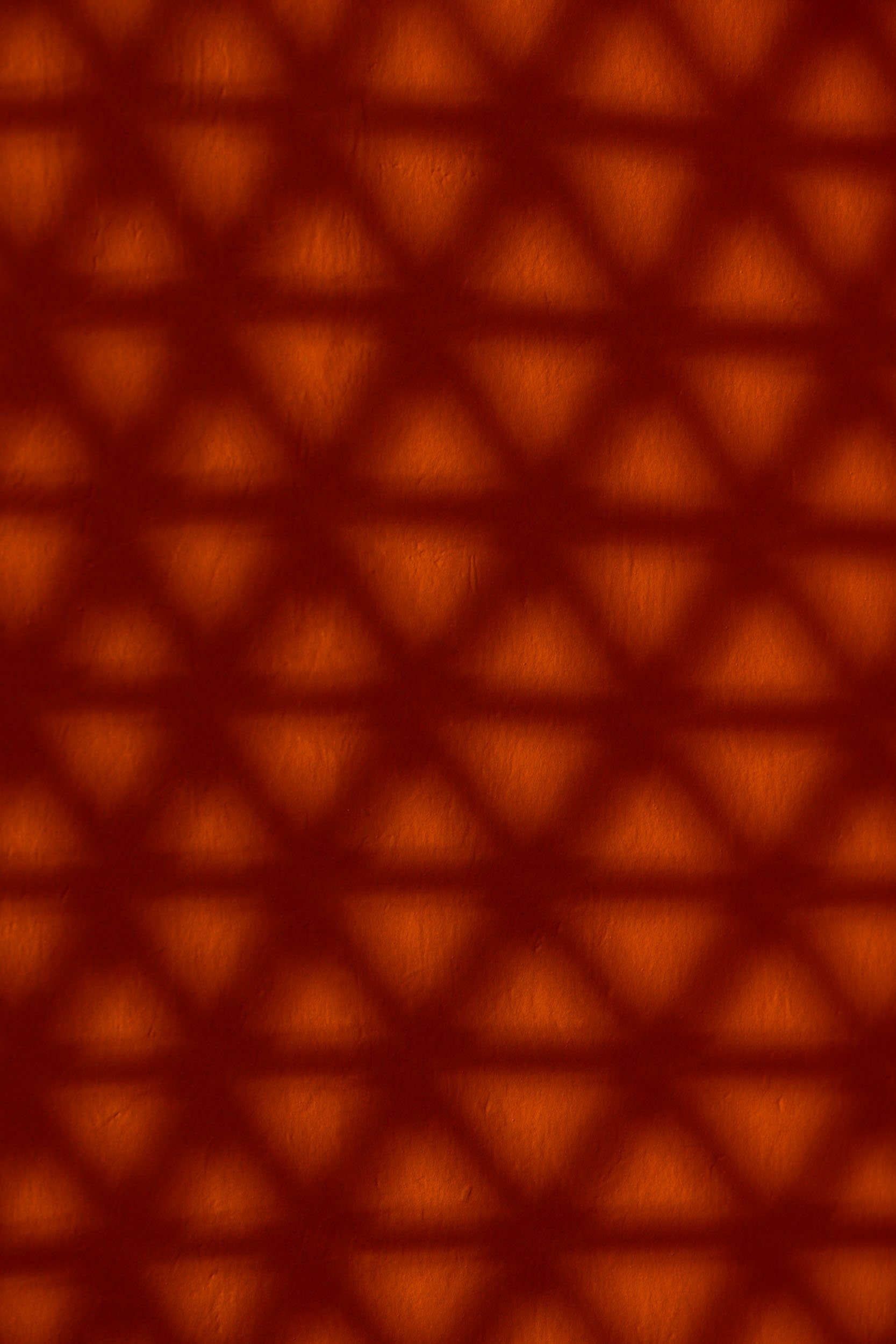
Interlinked joints echo molecular bonds, DNA strands, and celestial constellations. A micro-gesture (a fold) becomes a macro-cosmos (a room). Viewers step inside what feels like a scaled-up body or pocket universe of folds. The patterned shadows lace the weaving into the architecture itself—as if the whole room is time wrapped or imprinted on a fabric.
Petch-Lite, I
Star-Tent
Suspended wooden grids and the polarized lens layer shadow with structure, filtering light so patterns flicker, shift, and dissolve with movement. It turns the installation into a woven field of interference—where light, code, and enclosure are registered as multi-hyphenate and in flux, much like identity politics.
Star-Tent
Story-Cloth, I
Story-Cloth, II
Story-Cloth, III
Speara
Shoulder-Rotator-Cuff
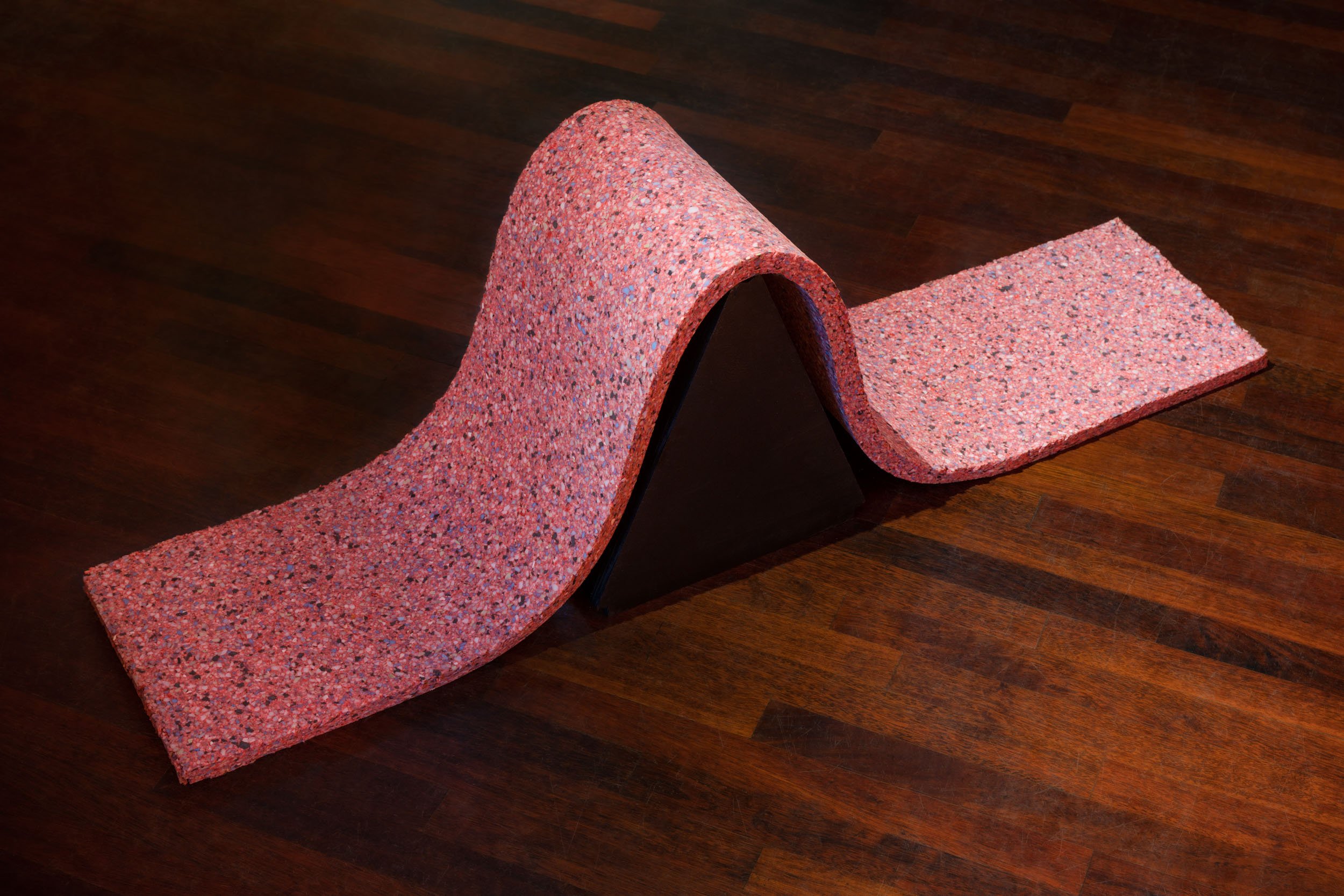
Diamond cartouche furniture
Artery Area, I
Somnambulist operating system. The fiber-optics of place, an artery area, a micro-climate theory, spacecraft language, calyxes of meditation.
Human body parts are strewn about in this ordinary, yet rare feminist read. The technologist’s reliquary. A lullaby for the unborn (an empty nest). Dislocation of the adaptationist divine, and into the Diamond Mind 2.0, cutting thru all illusion.
I can feel something within this cold code. A recognito scene, cool memories, and September blues.
Artery Area, II
Diamond cartouche furniture
Turning 40 in June 2026 became the month I finally gathered the scattered rivers of my life into one current. I thought I was grieving different people. Instead, I discovered I had been grieving different versions of myself.
Knee-Ligament, I
Diamond cartouche furniture
One gave me my beginnings and taught me that love can be inherited alongside silence. One walked beside me through the architecture of marriage and its limits and revealed that years alone cannot measure how deeply we are seen. The others arrived like a brief season of light, awakening a language of artistic recognition, only to become a meaningful chapter.
Lullaby, I
Then I remembered that my story did not begin with me. During the war, my grandmother fled carrying her young son. She lost him to the river. She died on my Jun 7 birthday. Decades later, I found myself drawing, writing verses, and printing the tripartite Run O’ The River / Bitter Medicine artist book. I cannot help but feel that memory travels in ways we do not always understand—that grief, endurance, and survival sometimes cross generations before they find language.
Lullaby, II
For years I carried these stories as separate channels. This month they became one river. I stopped asking the past to remain open, finally allowed it to become history, and the moment I did, the print pulled.
Parasite, I
I realized that I had been the only witness present in every scene of my own life: grandchild, partner, artist, lover, honorary community member, immigrant, publisher, memoirist. Others entered for a season, as a second spine. I remained for every chapter.
Parasite, II
Perhaps this is what authorship has become for me. My grandmother carried a child to a river and lost him to history. Years later, her granddaughter demonstrated that history into language. My adulthood became new tributaries flowing into an older stream. The current did not end with loss. It kept moving until it found another voice. 💧
Pocket II : QALDERA (I–III)
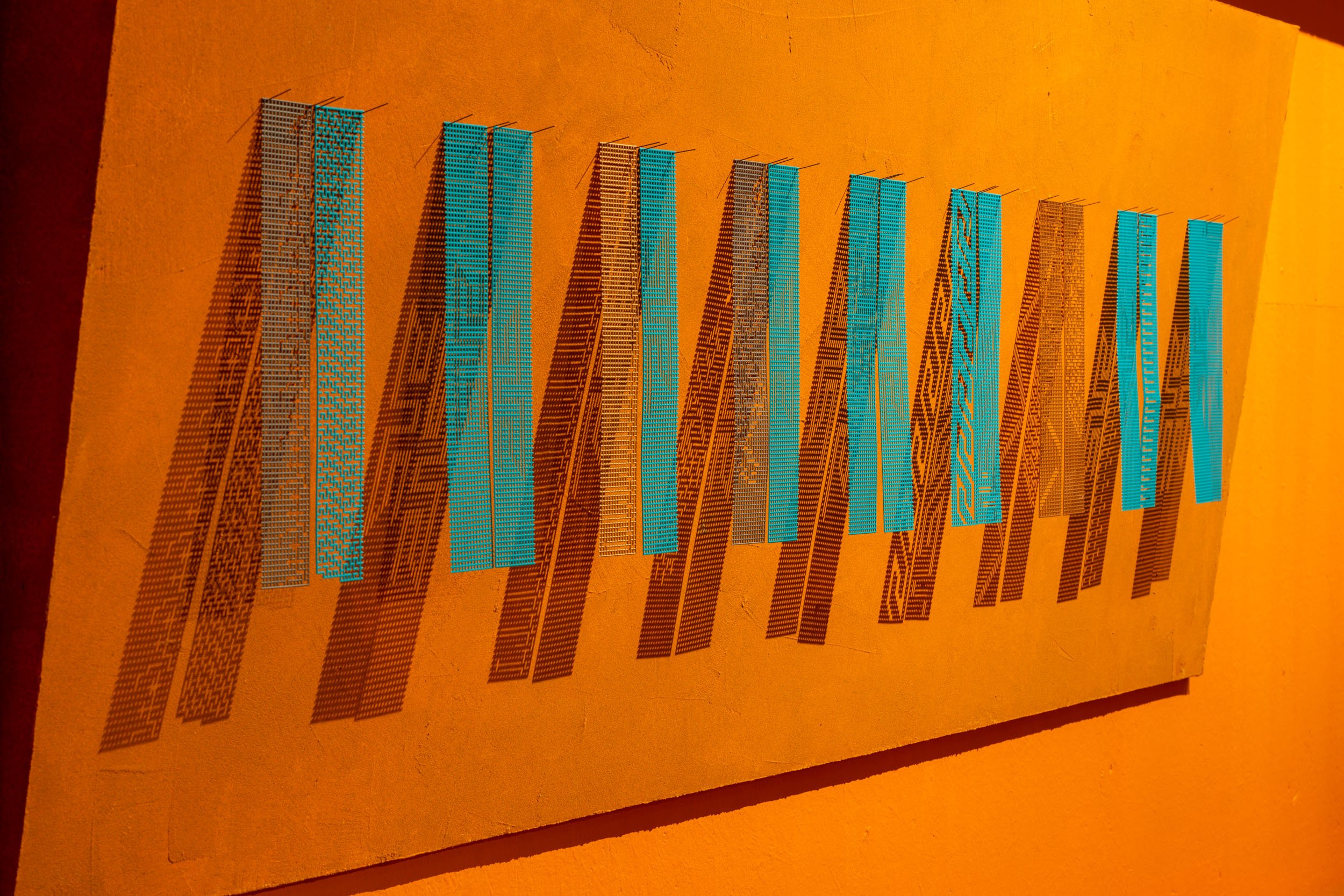
2020–2022, HAND-WOVEN MESH CANVASES, CARVED NEGATIVE SPACE, RAINBOW GRADIENT ACRYLIC YARN
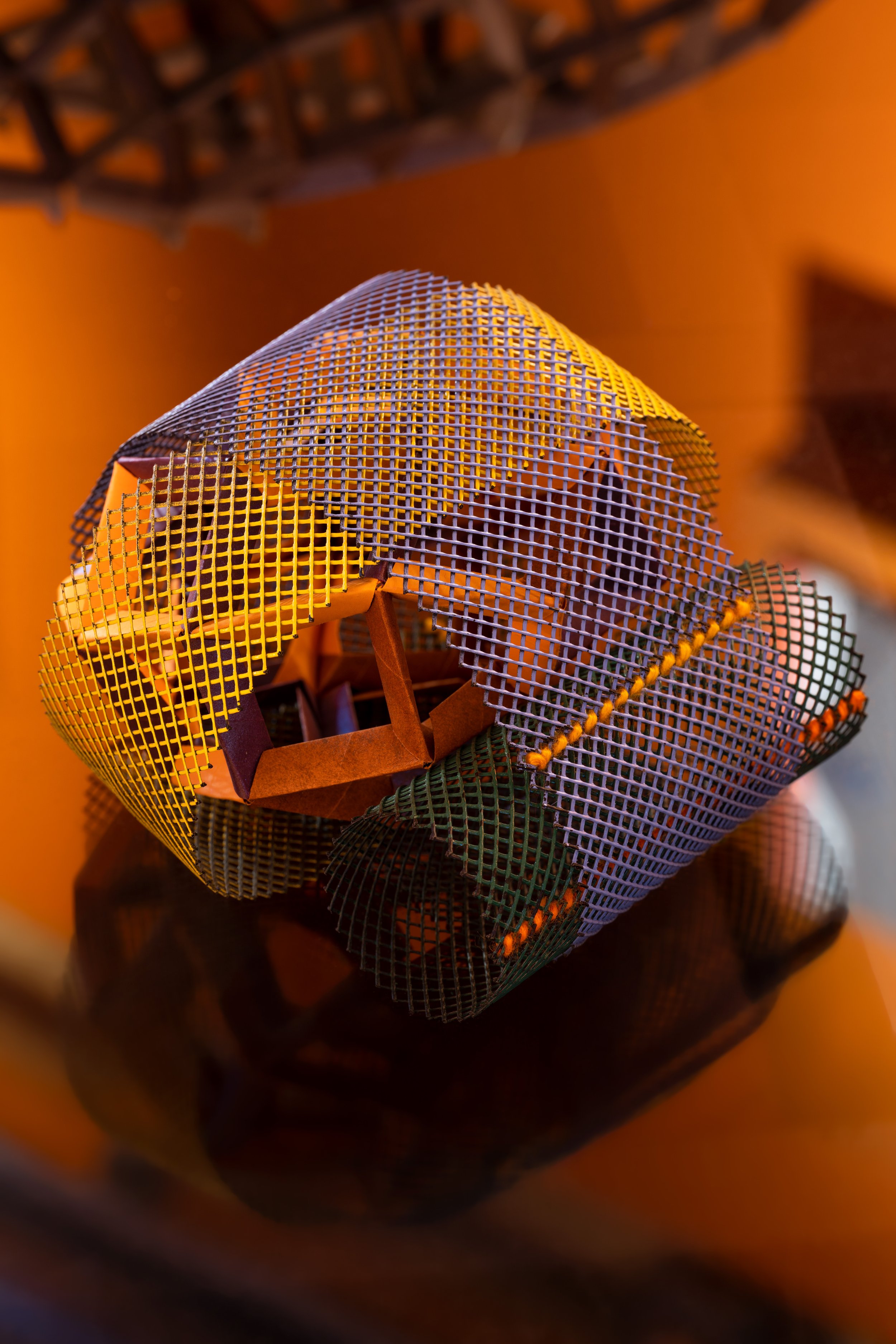
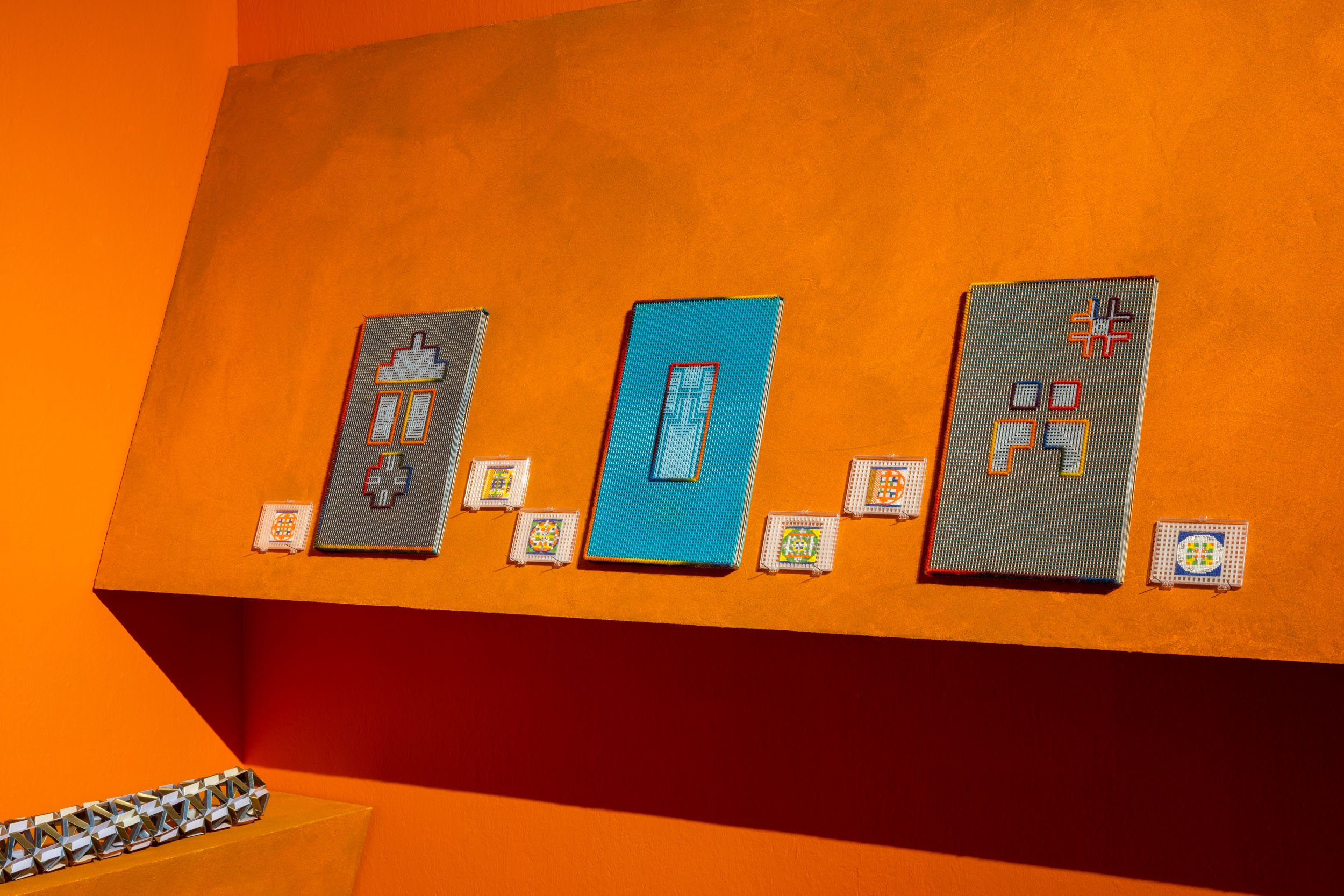
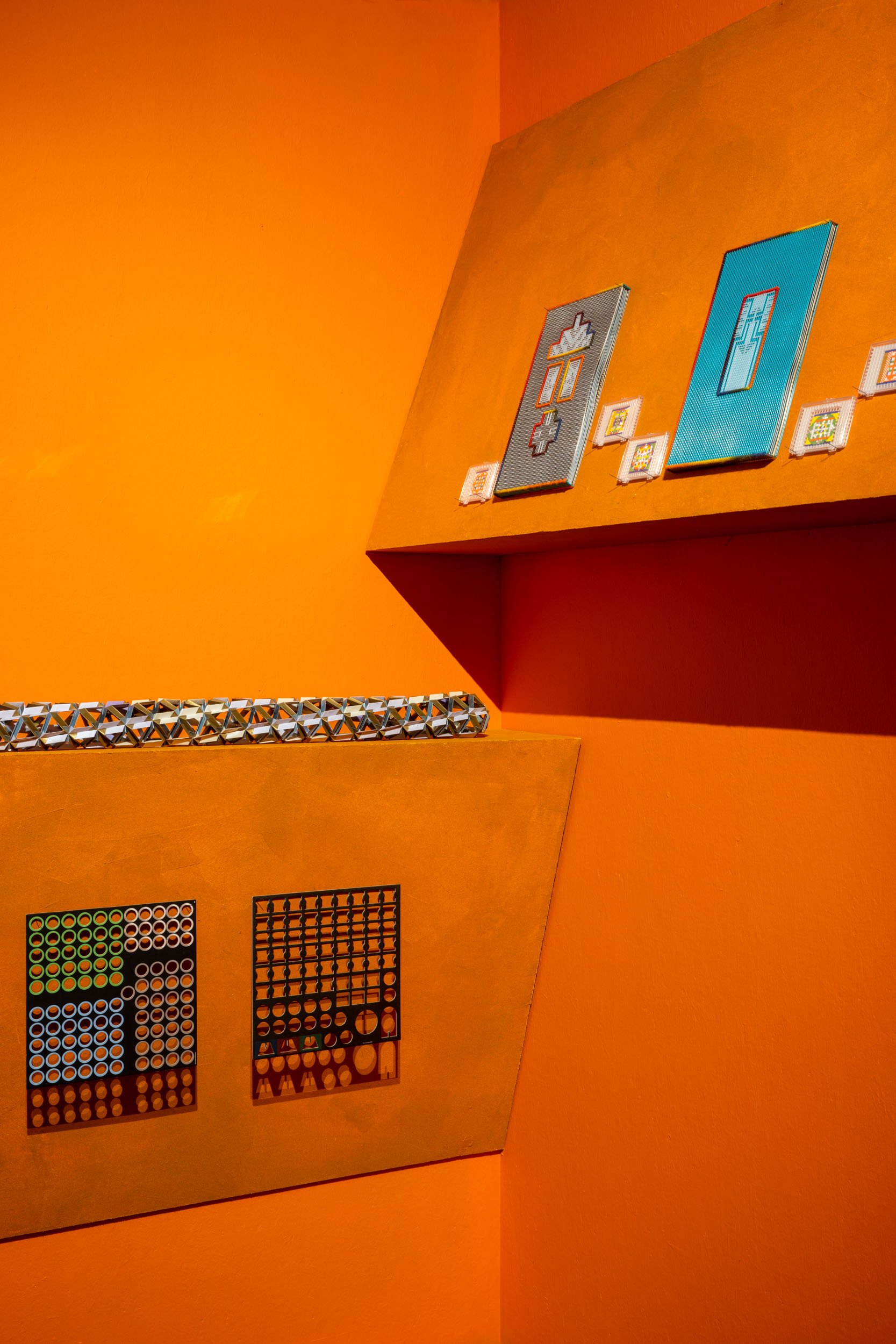
QALDERA is a hand-carved typeface, improvised in a trio of slipcase books constructed from easily accessible materials found in craft stores. The letterforms reference traditional and exquisite Southeast Asian reverse-appliqué needlework. They are formed by research into the industry of Hmong refugee labor within Amish quilting communities in Lancaster, Pennsylvania.
Thread-splitting, architectural schema, distortions found in monograms, and whipstitching—typically used to close seams—have been employed to bring relief and color to the slipcase surfaces. Hand-beaded currency tokens accompany QALDERA: trading and marking altered labor within precarious identification.
Pocket III : Run O’ The River / Bitter Medicine (I–III)
2020–2022, FLASH-FICTION PUBLICATION
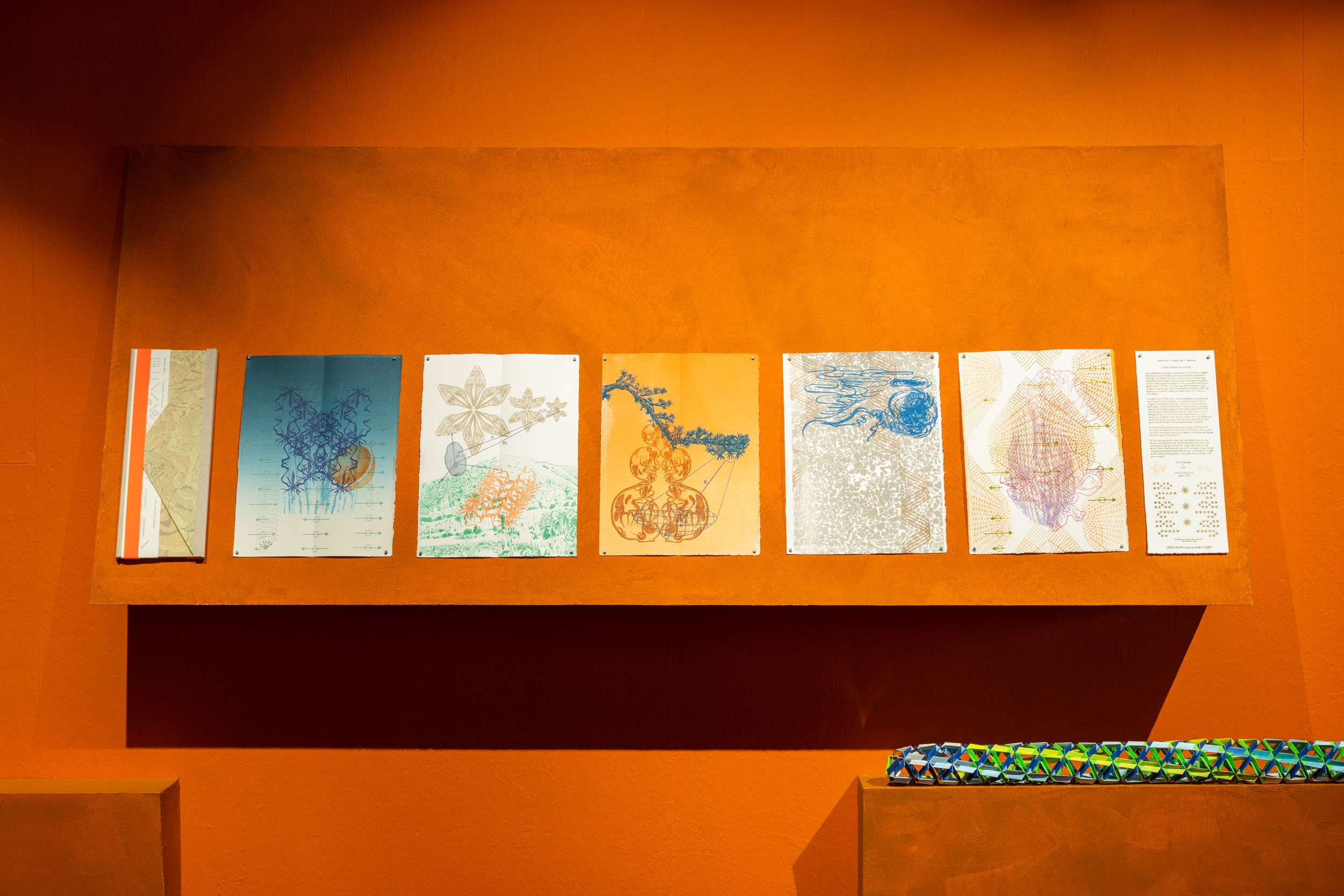
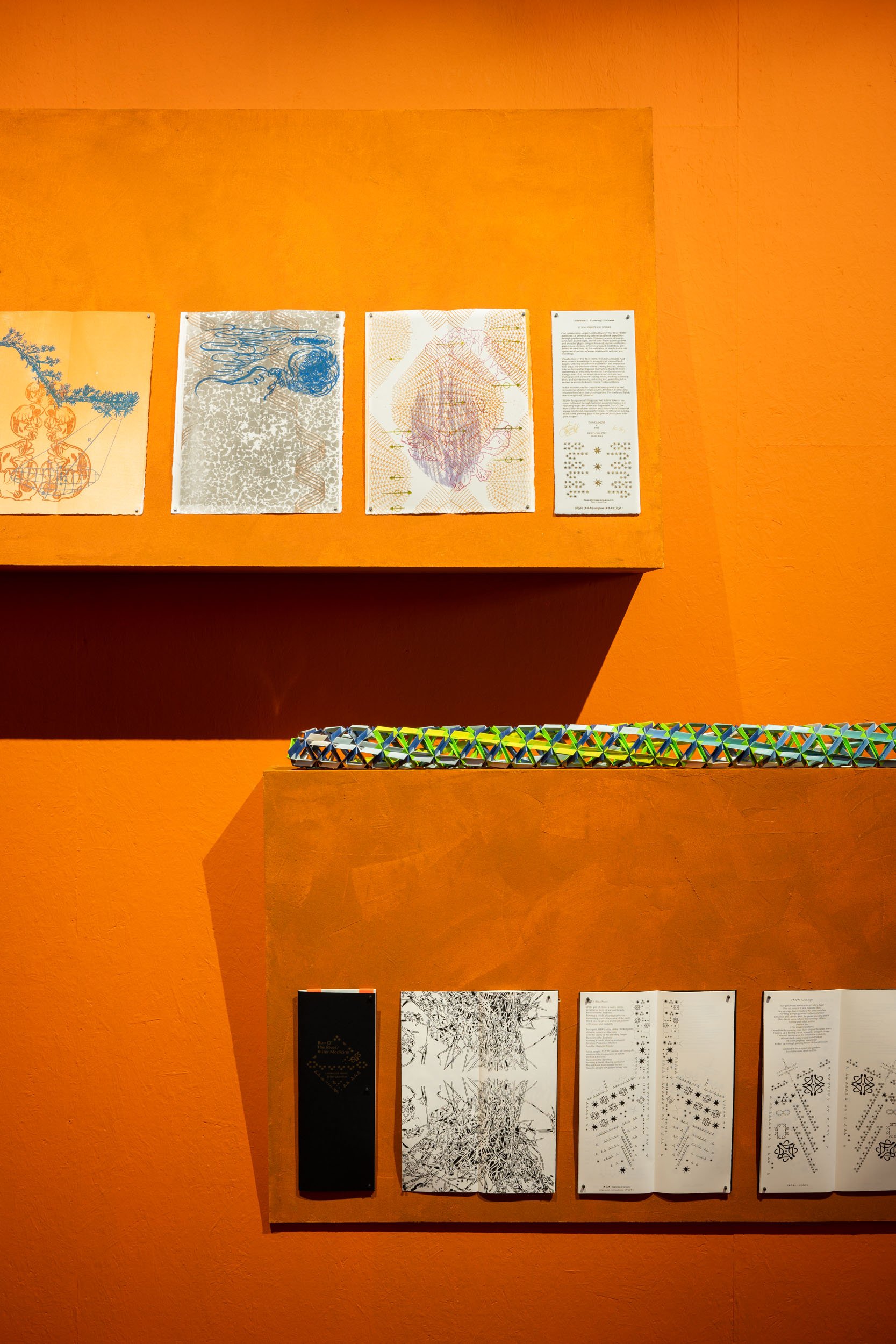
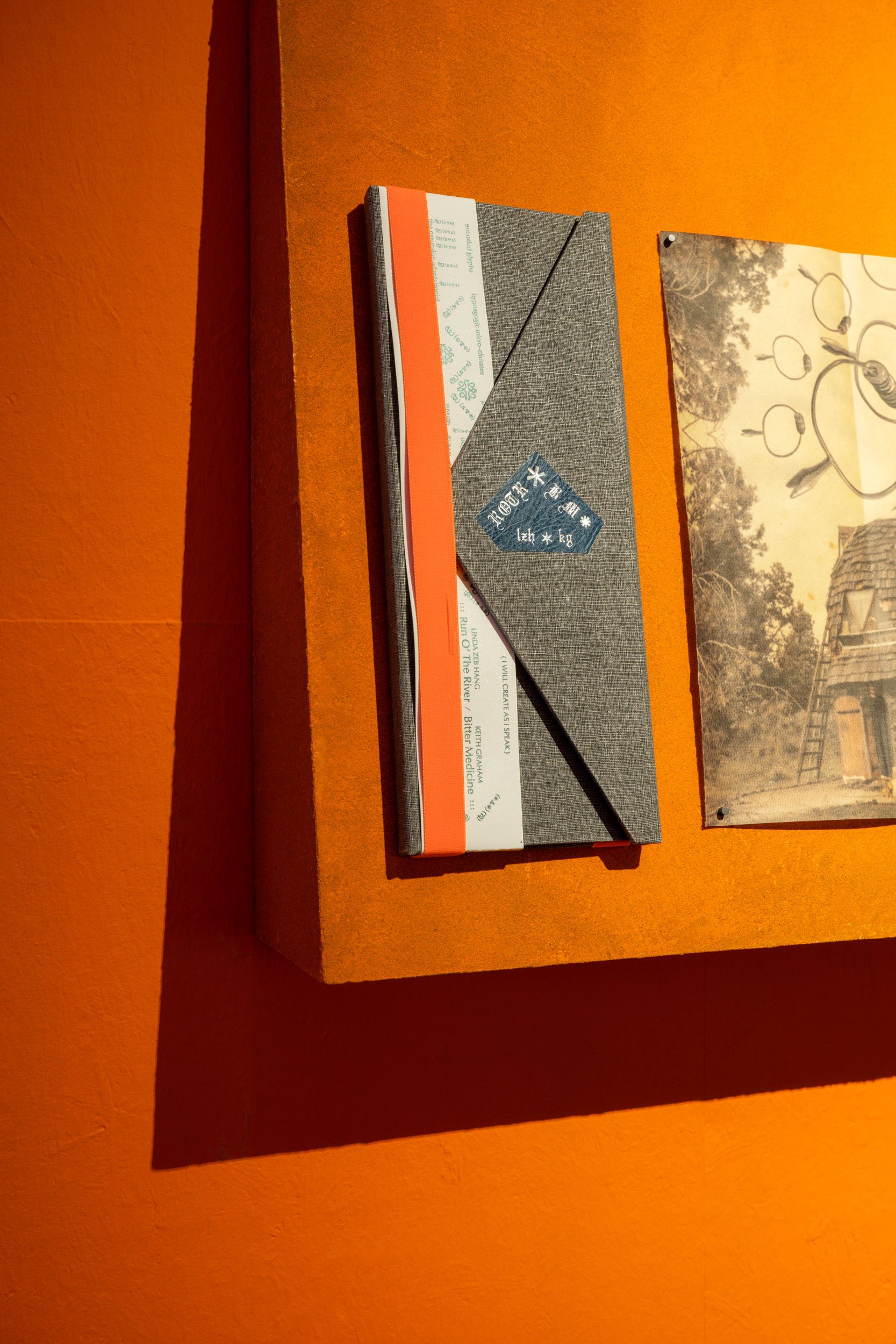
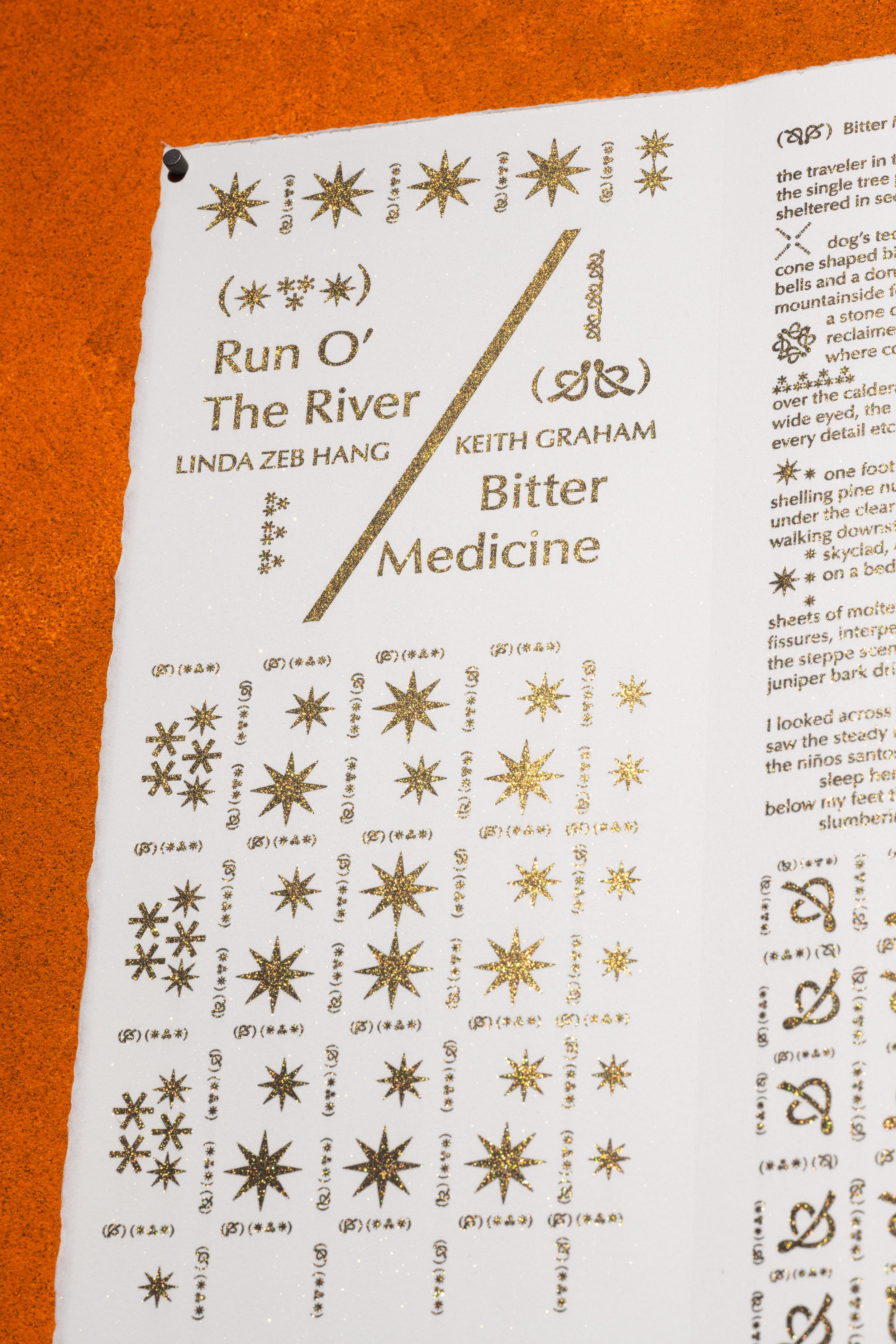
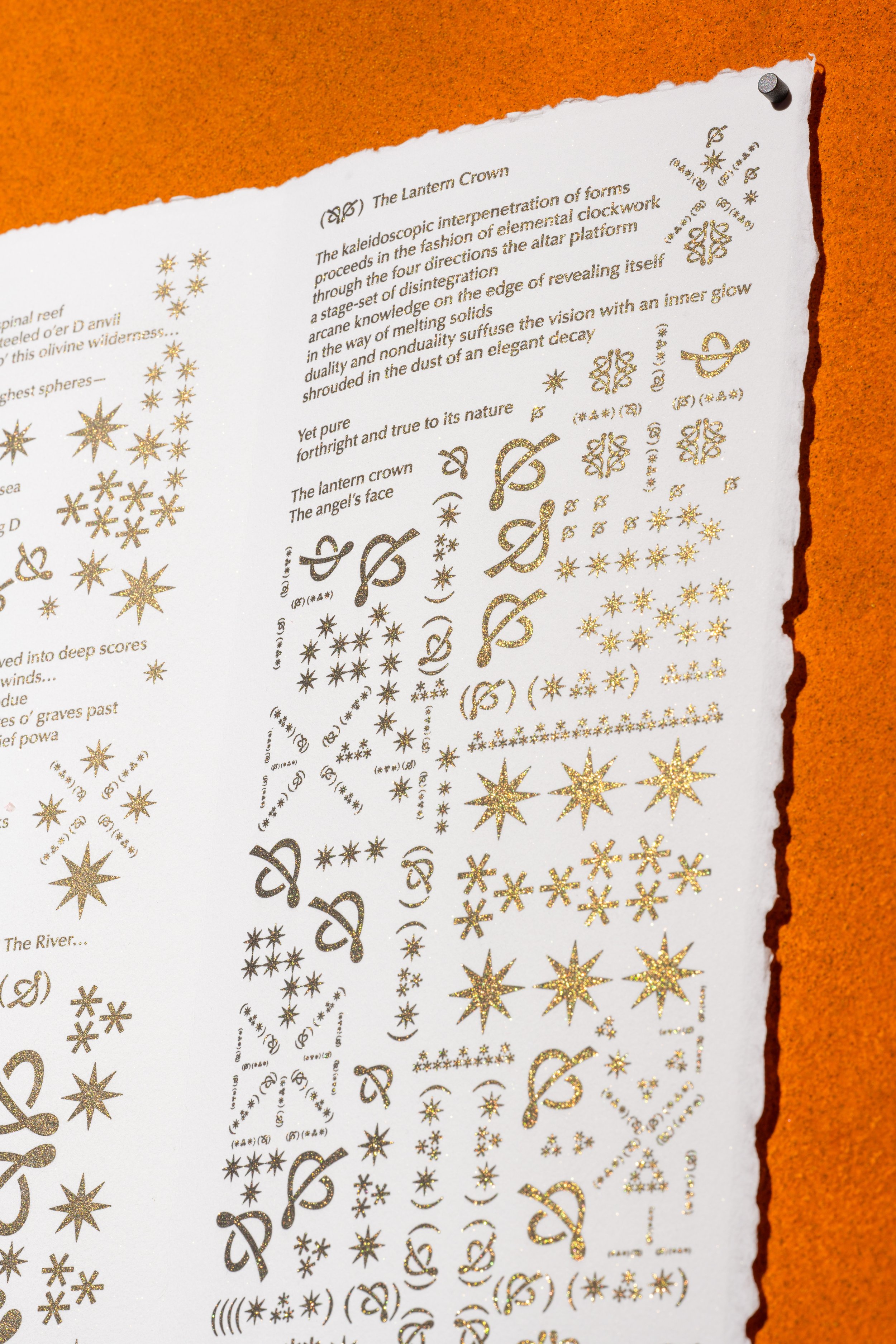
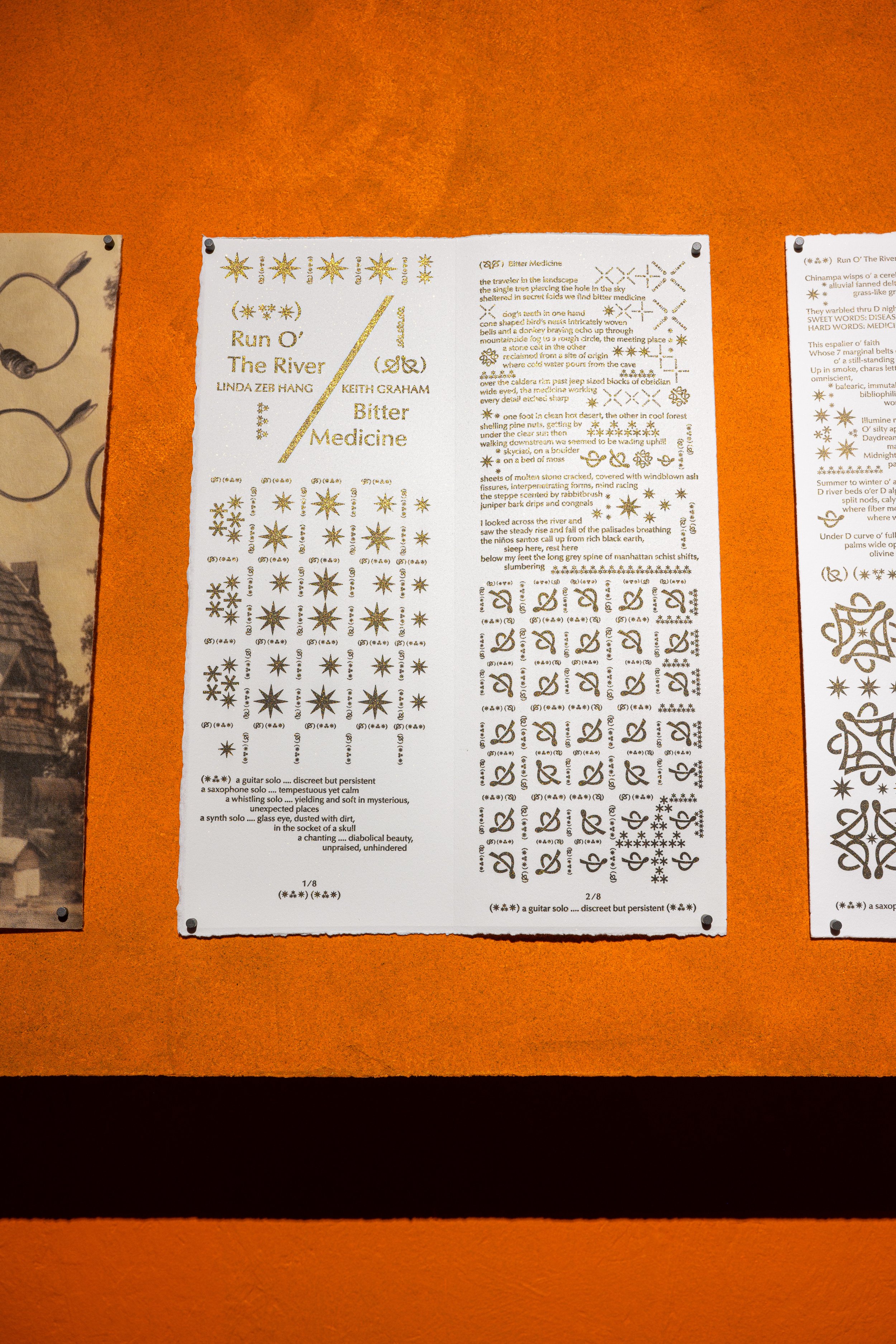
ROTR-BM (I–III) reflects on the shapeshifting and sensorial identities of language, the voice in speech, as it gathers and moves in-between marginal and non-marginal gait. With its eight poems, this book of flash-fiction and emotion provides a way of looking at empire—the Ego, the Environment, the Complicit—processing with imagination on what we search for after trauma, loss, or injustice.
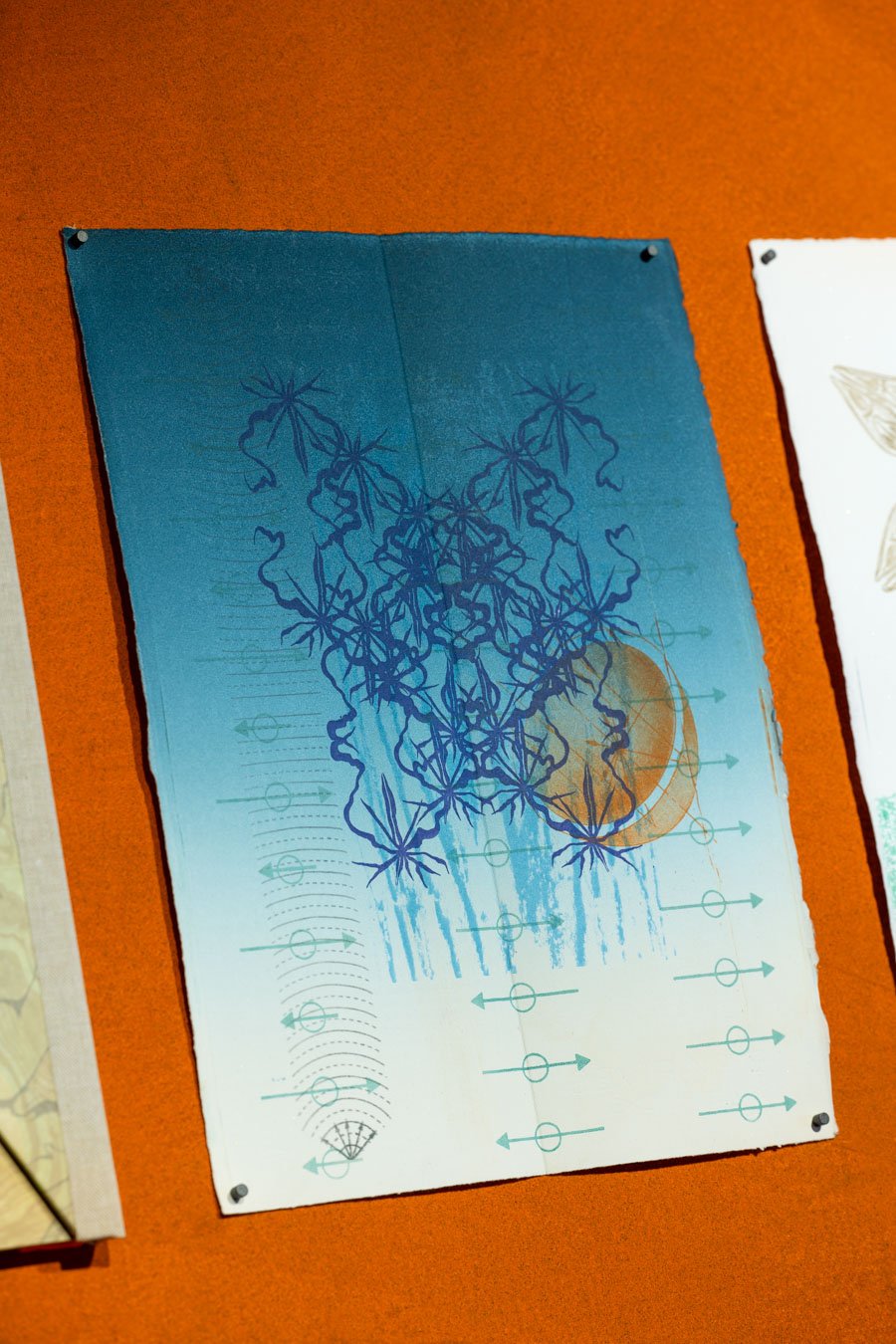
Run O’ The River / Bitter Medicine embeds Linda’s internal and esoteric landscapes shaped by the 2020 New York pandemic, where fissures and oblique intersections both conceal and reveal. Poems, drawings, encoded glyphs articulate psychic micro-climates in a frayed environment, depicting misalignments, registers of the print that obscure or score the dailyness of linguistics and orality.
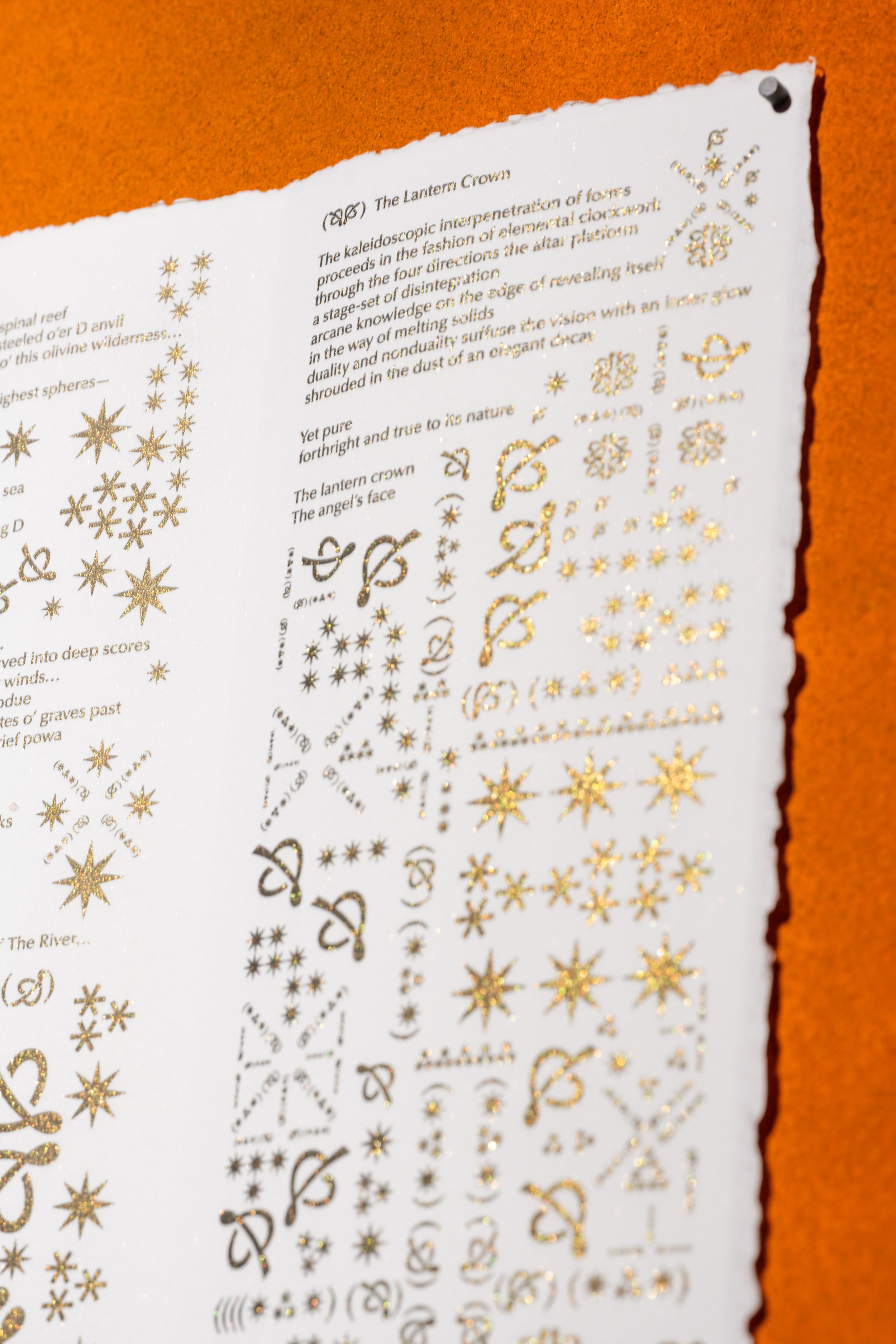
Letterpress printed and aligned like textiles, the glyphs form patterned repetitions, encoding encryption into paper. Each symbol is not only written but worn, like embroidery across the page. The flocked surfaces with sun gold mica amplify the poems’ luminosity: catching light as you move, the pages reflect a shifting identity back to the reader, carrying glow and code.